Is Your Plastic Salt Grinder Adding Microplastics to Food?

NonToxCo Research
Science & Safety Team · 3/31/2026
The Salt Grinder Problem
Every time you twist that plastic salt grinder, you are likely adding a side of microplastics to your dinner. A 2026 study published in Science of The Total Environment found that common plastic grinder heads shed thousands of particles into salt during routine use.
Researchers tested grinders from three different retailers. The results were consistent: the plastic components are breaking down under mechanical stress. One brand released an average of 15,743 particles per 50 grams of salt. These aren't just invisible dust. They are fragments of polyethylene terephthalate (PET) and polycarbonate (PC), measuring up to 55 micrometers in size.
Why It Matters
We often worry about microplastics in the ocean or our water supply, but this study proves that our own kitchen tools are active contributors. The grinding process creates high mechanical stress, which causes the plastic teeth of the grinder to degrade directly into your food. While the industry continues to use these materials for their low cost, the reality is that you are consuming these synthetic polymers every time you season a meal.
What to Use Instead
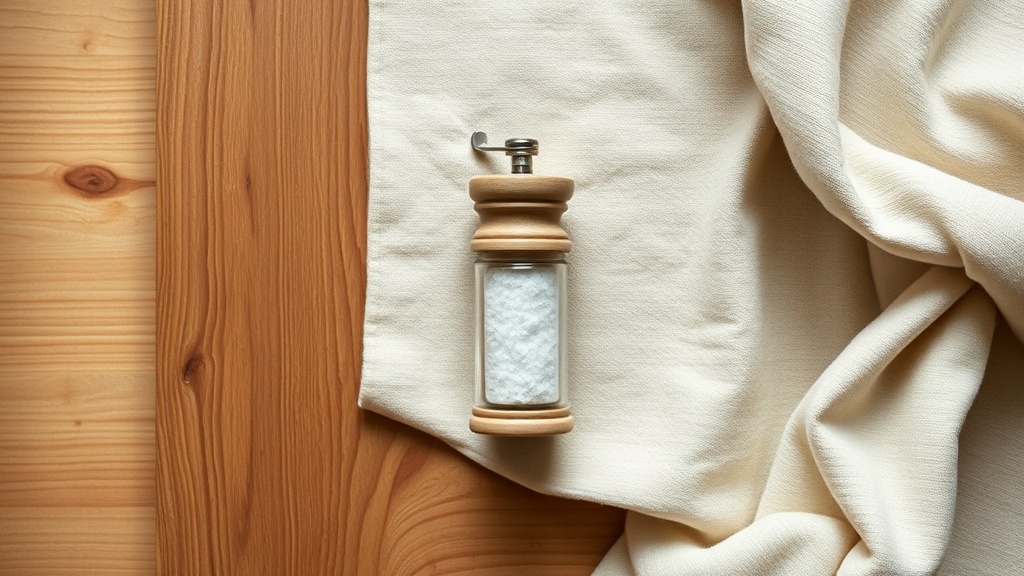
You don't need to keep ingesting plastic fragments. The solution is to move away from plastic mechanisms entirely. Look for grinders with ceramic or stainless steel grinding components and glass or wood bodies. These materials do not shed synthetic particles into your food, and they are built to last far longer than the disposable plastic versions found in grocery aisles. It is an easy swap that removes a constant source of contamination from your kitchen. Explore our non-toxic kitchen alternatives to find durable, plastic-free options for your pantry.
Source: Yang C, Li K, Gowen A, Xu JL (2026). Sci Total Environ.