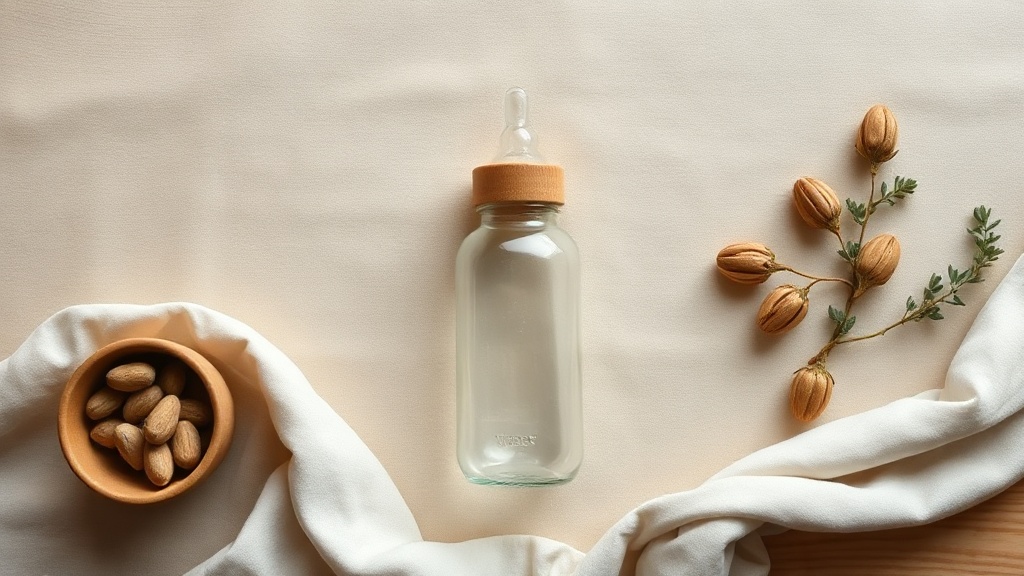
Are glass baby bottles safer than plastic ones?
Yes. Glass baby bottles don't leach chemicals into milk or formula. They can be sterilized at high temperatures without chemical migration and don't scratch or cloud like plastic.
What's actually in it
Glass baby bottles are made from borosilicate glass, the same inert material used in laboratory equipment. Glass doesn't contain BPA, BPS, phthalates, or any synthetic chemical additives that can migrate into milk or formula. It can be sterilized in boiling water or a sterilizer without any concern about chemical migration caused by the heat.
Glass doesn't scratch like plastic, which means bacteria can't hide in microscopic grooves and the surface stays inert over the bottle's lifetime. Glass bottles are heavier than plastic, but for young infants who don't yet hold their own bottles, this is not an issue.
What the research says
A 2026 study on bisphenol exposure in infants found that feeding vessel material is a significant determinant of infant bisphenol exposure. Infants fed from plastic bottles (including BPA-free bottles) had higher bisphenol metabolite levels in urine than those fed from glass bottles under otherwise similar conditions.
Researchers consistently recommend glass as the lowest-risk material for infant feeding. The only practical consideration is breakage: use a silicone sleeve around the glass bottle when older infants are starting to hold bottles themselves. The safety advantage of glass over any plastic is consistent across the research literature.
The research at a glance
| Study | Journal | Year |
|---|---|---|
| Bisphenol exposure from infant feeding materials | Toxicol Sci | 2026 |
What to use instead
Browse our curated non-toxic alternatives. Every product is third-party certified.
Shop Non-Toxic Baby