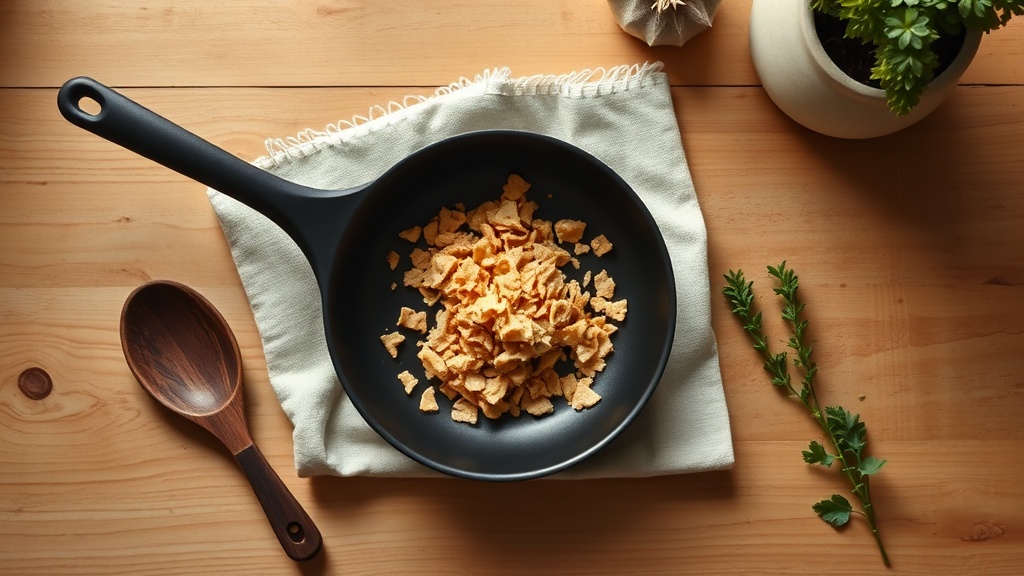
Are nonstick Teflon pan flakes dangerous if you swallow them?
Yes. Tiny PTFE particles from scratched nonstick pans cause oxidative stress, mitochondrial damage, and DNA damage in gut cells.
What's actually in it
The slick gray coating on most nonstick pans is polytetrafluoroethylene (PTFE), also sold as Teflon. Metal utensils, steel wool, the dishwasher, and normal wear release tiny particles of PTFE into your food. A well-used pan with visible scratches is constantly shedding. You swallow the flakes without noticing.
PTFE is often called "inert" because it doesn't react with most things in a cold test tube. That's a different question from what happens when a living cell has to deal with it.
What the research says
A 2025 study in J Hazard Mater exposed human intestinal cells to PTFE microplastics and nanoplastics at realistic doses. The particles triggered oxidative stress, mitochondrial damage, and DNA breaks. Mitochondria are the part of the cell that makes energy. When they're hurt, the cell functions poorly or dies. DNA breaks are how cancer gets started.
Nanoparticles did more damage than larger microparticles because they slip inside cells. The doses used matched what researchers have found in real gut samples from people, so this isn't a far-fetched scenario.
The combination is the problem. You eat the particles, your gut lining takes the hit, and the PFAS chemicals used to make PTFE come along for the ride. Once a nonstick pan is scratched, its useful life as a cooking surface is over.
The research at a glance
What to use instead
Browse our vetted, non-toxic alternatives. Every product is third-party certified.
Shop Non-Toxic Kitchen