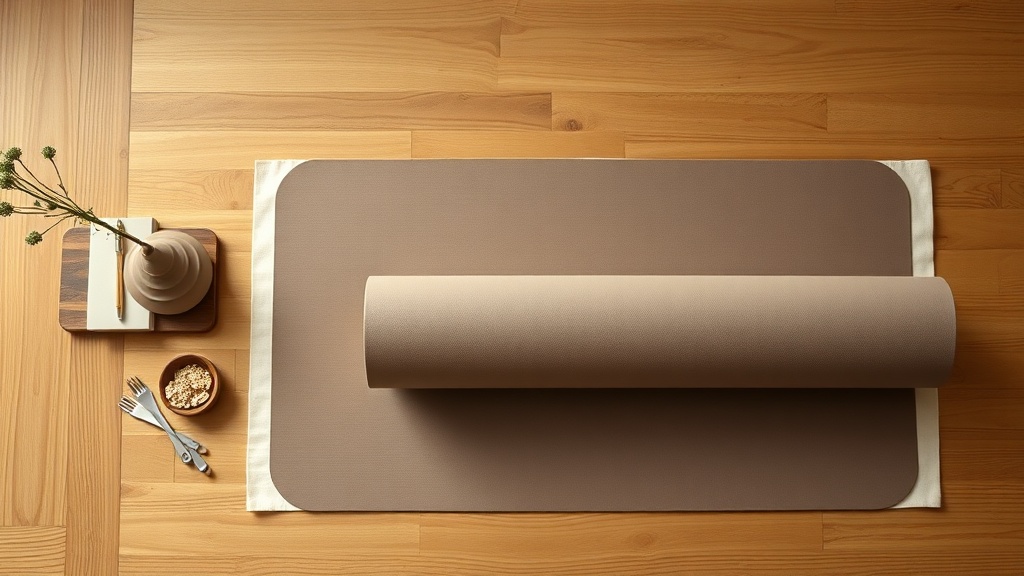
Are yoga mats made from PVC safe to breathe near for hours?
Not really. PVC mats release phthalates into the air and onto skin during practice.
What's actually in it
Most inexpensive yoga mats are PVC (polyvinyl chloride) softened with phthalates like DEHP or DiNP. The "new mat smell" is phthalates and solvents evaporating. Warm bodies on the mat pull more out through sweat, and face-down poses put your nose right against it.
Phthalates are endocrine disruptors linked to hormone problems and developmental issues.
What the research says
A 2025 study in Nat Commun linked prenatal phthalate exposure to changes in newborn metabolism and lower scores on infant neurodevelopment tests. A 2025 study in J Hazard Mater mapped phthalates across diet and consumer products.
Cleaner yoga mats: natural rubber, cork, or jute. TPE (thermoplastic elastomer) mats are an upgrade over PVC but still plastic. If you have a PVC mat already, air it out in the sun for a few days before using, and replace it when it starts to smell strong or flake.
The research at a glance
| Study | Journal | Year |
|---|---|---|
| Impact of prenatal phthalate exposure on newborn metabolome. | Nat Commun | 2025 |
| Plastic additives in the diet. | J Hazard Mater | 2025 |
What to use instead
Browse our vetted, non-toxic alternatives. Every product is third-party certified.
Shop Non-Toxic Home