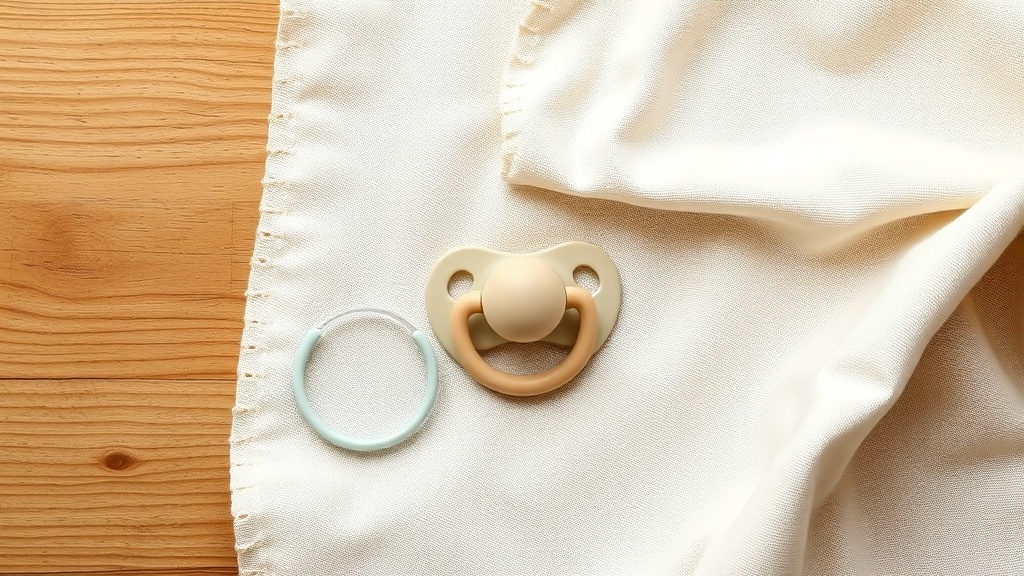
Are silicone pacifiers safer than latex rubber pacifiers?
Mostly yes. Silicone is more stable than latex, but both can release chemicals with heat and wear. Check for older nipples that have degraded.
What's actually in it
Latex pacifiers come from natural rubber, which can trigger allergies in sensitive kids and breaks down with saliva, exposing more rubber over time. Silicone pacifiers are clear and more durable, but they're made of polydimethylsiloxane and contain small amounts of cyclic siloxanes (D4, D5, D6).
At room temperature, silicone leaches slowly. Under heat (like boiling to sterilize) or with prolonged chewing, leaching speeds up.
What the research says
A 2025 study in J Hazard Mater tested silicone products and detected D4, D5, and D6 after heat exposure. D4 is a reproductive toxin; D5 affects liver function in animal studies.
For daily use, silicone beats latex for most babies. Replace pacifiers every 4 to 6 weeks or sooner if the surface gets sticky, cloudy, or stretched. Sterilize quickly rather than boiling for long periods, and cool fully before giving back to the baby.
The research at a glance
| Study | Journal | Year |
|---|---|---|
| Silicone bakeware as a source of human exposure to cyclic siloxanes via inhalation and baked food consumption. | J Hazard Mater | 2025 |
What to use instead
Browse our vetted, non-toxic alternatives. Every product is third-party certified.
Shop Non-Toxic Baby