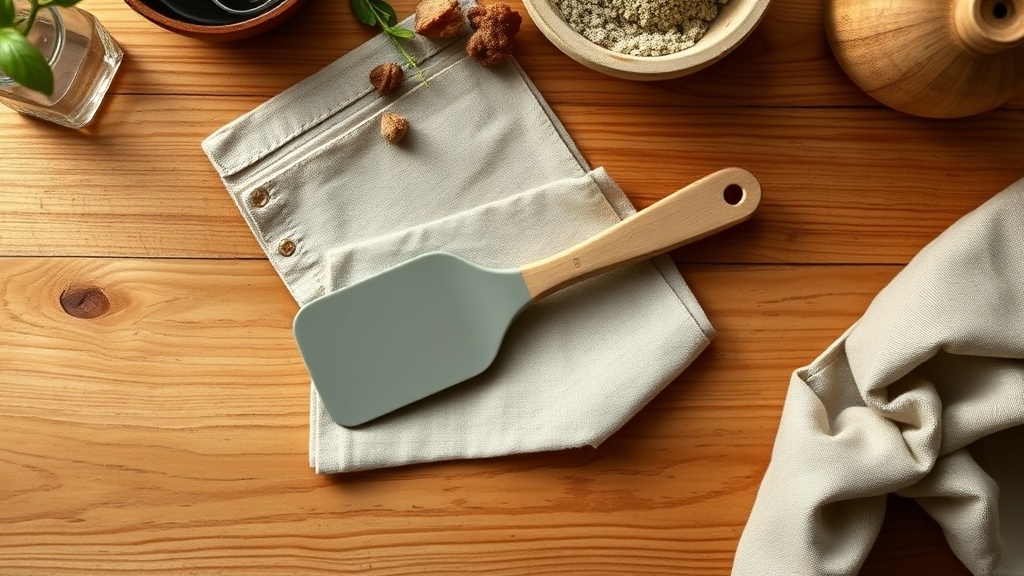
Are food-grade silicone spatulas safe for cooking on high heat?
Use silicone below its heat rating. For very hot pans, use wood or stainless steel instead.
What's actually in it
Silicone spatulas are made from polydimethylsiloxane. Good food-grade silicone is flexible and heat resistant, but it is not magic.
High heat can release small silicone-related chemicals called cyclic siloxanes. The main ones to know are D4, D5, and D6.
What the research says
A 2025 study in Journal of Hazardous Materials tested 25 silicone bakeware products. It found cyclic siloxanes in the products and measured release into a food simulant and indoor air during 60 minutes of baking at 177 C.
That study tested bakeware, not every spatula. Still, it shows why heat, time, and silicone quality matter.
Use silicone for scraping bowls, folding batter, and low-to-medium heat cooking. Do not leave it in a hot pan, near a broiler, or against an open flame. For high-heat stirring, choose a wood spatula or stainless steel utensil.
The research at a glance
| Study | Journal | Year |
|---|---|---|
| Silicone bakeware as a source of human exposure to cyclic siloxanes via inhalation and baked food consumption. | J Hazard Mater | 2025 |