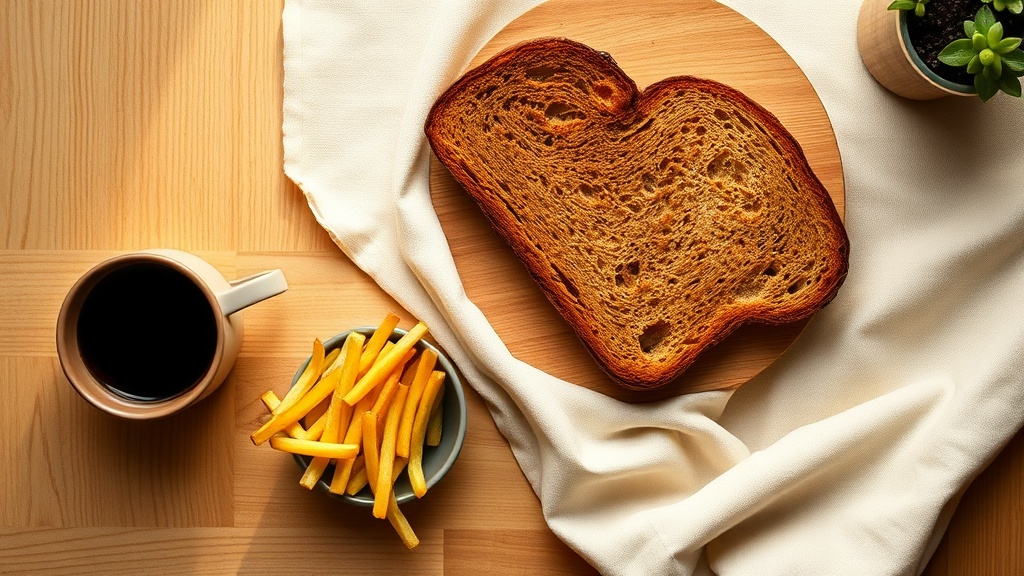
Can acrylamide in toast, fries, and coffee increase cancer risk?
caution
What's actually in it
Acrylamide is a chemical that forms naturally when starchy foods are heated above 120 degrees C (250 degrees F). It's created through the Maillard reaction, the same browning process that gives toast, french fries, potato chips, roasted coffee, and baked goods their golden color and flavor.
The darker the brown, the more acrylamide. That heavily toasted slice of bread has more than a lightly toasted one.
What the research says
A 2026 review in Food Chem examined the current state of knowledge on acrylamide in food, from how it forms to what it does in the human body. The review confirmed that acrylamide is classified as a Group 2A carcinogen (probable human carcinogen) by the International Agency for Research on Cancer.
Once you eat acrylamide, your body converts it to glycidamide, which directly damages DNA. Glycidamide forms DNA adducts, chemical bonds that cause mutations during cell division. This is the mechanism behind its cancer-promoting effects, particularly in the kidneys, uterus, and nervous system.
The biggest dietary sources are french fries, potato chips, toast, crackers, cookies, and coffee. Children often have higher exposure per body weight because they eat proportionally more of these snack foods.
You don't need to avoid these foods entirely. Toast bread to light gold, not dark brown. Cook fries to the lightest acceptable color. Store potatoes in a cool, dark place (not the refrigerator, which increases sugar content and therefore acrylamide formation). Boiling and steaming produce zero acrylamide.
The research at a glance
| Study | Journal | Year |
|---|---|---|
| Acrylamide in Food: From Maillard Reaction to Public Health Concern | Food Chem | 2026 |
What to use instead
Browse our vetted, non-toxic alternatives. Every product is third-party certified.
Shop Non-Toxic Kitchen