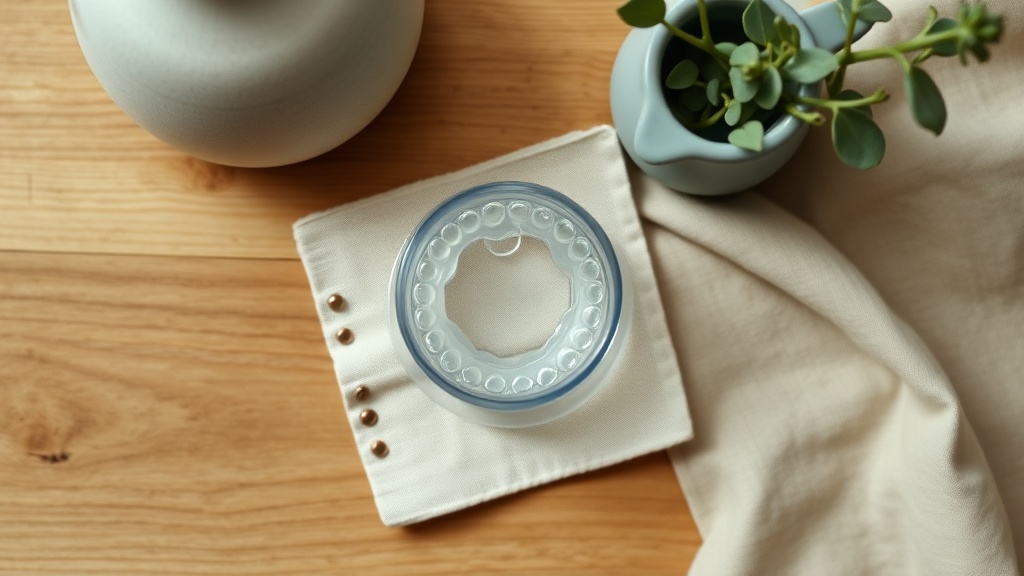
Can clear dental aligners and retainers release microplastics into your mouth?
Yes. Clear aligners, oral splints, and mandibular devices release micro- and nanoplastics into saliva through daily wear and grinding.
What's actually in it
Clear aligners, retainers, night guards, and sleep apnea devices are made from various plastics including polyurethane, polycarbonate, and PETG. You wear them against your teeth for hours a day or all night. Chewing, grinding, and saliva exposure break down the surface over time.
Your mouth is warm, wet, and acidic, a perfect environment for pulling chemicals and particles out of plastic.
What the research says
A 2026 review in Quintessence Int examined whether oral plastic devices release micro- and nanoplastics. They reviewed evidence from studies that tested these products under simulated mouth conditions.
All types of oral plastic devices released measurable microplastic particles. The shedding was accelerated by chewing forces, teeth grinding, and exposure to acidic drinks like coffee and juice.
Night guards and aligners worn during sleep released particles that were swallowed with saliva throughout the night. Over months of use, the cumulative exposure adds up.
If you need an oral device, asking your dentist about materials with lower microplastic shedding rates and replacing devices before they show visible wear can help minimize exposure.
The research at a glance
| Study | Journal | Year |
|---|---|---|
| Oral splints, clear aligners, mandibular advancement devices: hidden sources of micro- and nanoplastics. | Quintessence Int | 2026 |
What to use instead
Browse our vetted, non-toxic alternatives. Every product is third-party certified.
Shop Non-Toxic Home