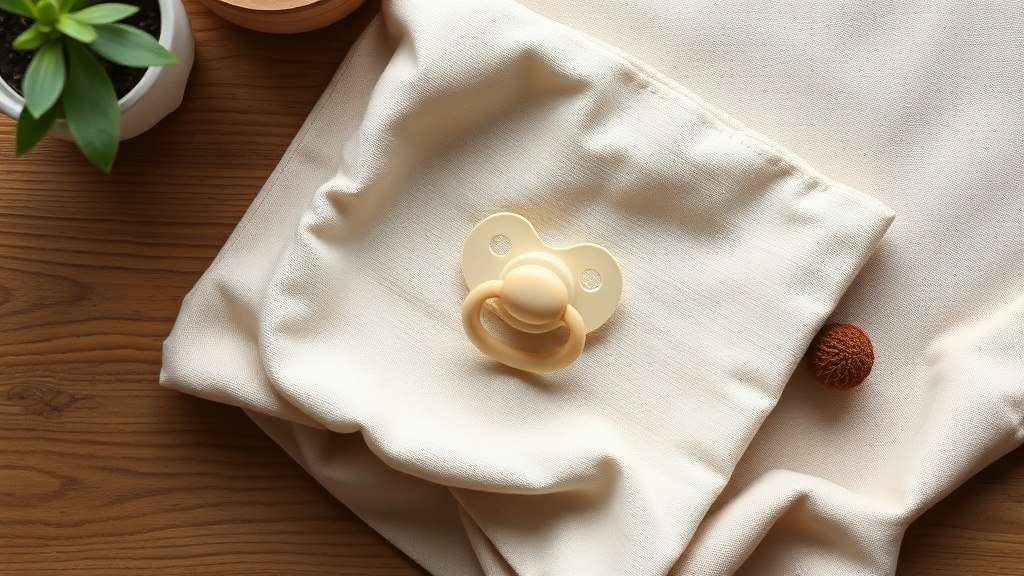
Do baby pacifiers leach bisphenol A into your infant's mouth?
Some do. Lab tests found measurable BPA migration from commercially sold pacifiers, even those not labeled as containing BPA.
What's actually in it
Pacifiers are typically made from silicone, latex, or polycarbonate plastic. While many brands now advertise as "BPA-free," the shields, handles, and hard plastic parts of the pacifier may still contain bisphenol A (BPA) or related bisphenol compounds. BPA is an endocrine disruptor that mimics estrogen in the body.
Babies suck on pacifiers for hours at a time, and saliva is an effective solvent. The combination of warmth, moisture, and constant friction creates ideal conditions for chemical migration from plastic into the mouth.
What the research says
A 2026 study in Environ Sci Pollut Res Int tested commercially available pacifiers for BPA migration using precise analytical methods. The researchers simulated real-world sucking conditions and measured how much BPA leached out over time. They found detectable levels of BPA migrating from some of the pacifiers tested.
The study included an exposure assessment for infants and toddlers, factoring in how long babies typically use pacifiers each day. Even at low migration rates, the cumulative daily exposure can be significant for a baby weighing only 5 to 10 kilograms.
BPA exposure in infancy is especially concerning because babies' bodies can't process and eliminate chemicals as efficiently as adults. Research has linked early BPA exposure to developmental delays, behavioral changes, and hormonal disruption.
Choose pacifiers made entirely from natural rubber latex or one-piece medical-grade silicone with no hard plastic parts. Avoid pacifiers with colored plastic shields or decorative elements, which are more likely to contain BPA or other additives. Replace pacifiers regularly, as wear and tear increases chemical leaching.
The research at a glance
| Study | Journal | Year |
|---|---|---|
| Migration of bisphenol A from commercially available pacifiers: HPLC-FLD analysis and exposure assessment in infants and toddlers | Environ Sci Pollut Res Int | 2026 |
What to use instead
Browse our vetted, non-toxic alternatives. Every product is third-party certified.
Shop Non-Toxic Baby