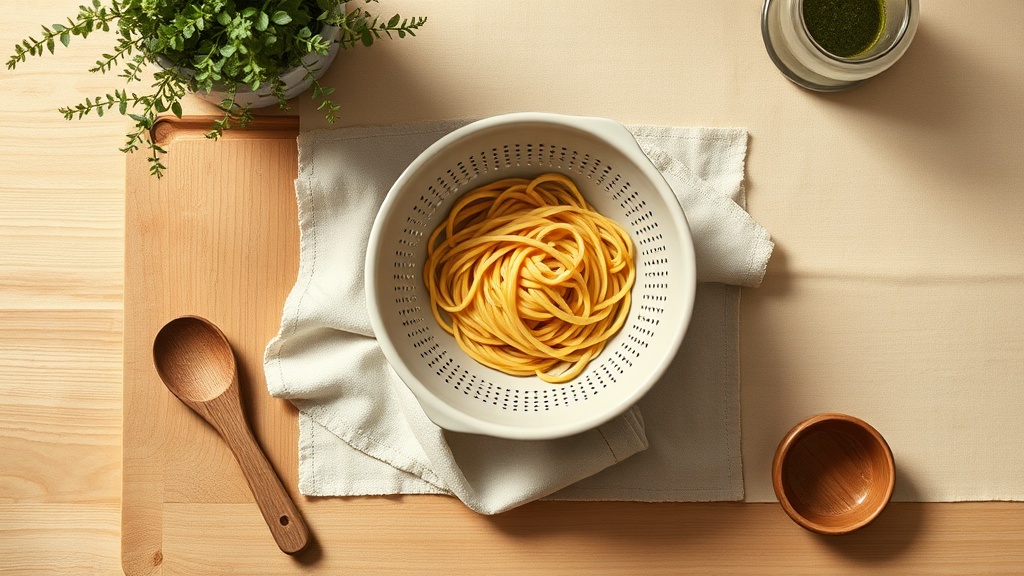
Do plastic colanders release microplastics when rinsing hot pasta?
Yes. Plastic colanders are made of synthetic polymers that shed microplastics into your food, especially when exposed to heat and friction.
What's actually in it
Plastic colanders are typically made from polymers like polypropylene or nylon. These materials are not stable when they encounter heat. When you pour boiling pasta into a plastic colander, the heat weakens the plastic structure. This causes the surface to break down and shed tiny pieces known as microplastics directly into your food.
These particles are not just inert bits of trash. They are synthetic materials that can enter your body through your diet. Once ingested, they have been linked to health concerns, including potential links to inflammatory markers in the body, according to a 2026 study in Environ Health Prev Med.
What the research says
The science is clear: plastic items shed particles during everyday use. A 2026 study in Sci Rep developed a new method to track how plastic fibers and microplastics break off during washing and handling. The study confirms that physical stress and environmental conditions cause these materials to release fragmented fibers.
The health risks of these particles are a growing area of concern in peer-reviewed research. A 2026 study in Ecotoxicol Environ Saf found that microplastics can even be found in the placenta, highlighting how these materials move through the body. Furthermore, a 2026 study in Sci Total Environ warns of the health hazards associated with microplastic release from plastic containers. When you use plastic to strain hot food, you are essentially adding microplastics to your meal.
The research at a glance
What to use instead
Browse our vetted, non-toxic alternatives. Every product is third-party certified.
Shop Non-Toxic Kitchen