Do plastic kitchen utensils release more chemicals the longer you use them?
Yes. Long-term migration tests show plastic utensils and containers release chemicals continuously, with amounts increasing over repeated use.
What's actually in it
Plastic spatulas, spoons, cutting boards, and food containers are made from polymers mixed with plasticizers, stabilizers, antioxidants, and colorants. These additives aren't permanently locked into the plastic. They slowly migrate to the surface and transfer into your food, especially when exposed to heat, fat, or acidic ingredients.
Standard safety tests only check how much leaches out over short periods. But most people use the same plastic utensils for months or years.
What the research says
A 2026 study in Food Saf (Tokyo) developed a long-term migration test method for plastic food utensils, containers, and packaging. Instead of the usual short test windows, they measured chemical release over extended periods that better reflect real kitchen use.
The results showed that chemical migration doesn't stop after the first use. Plastics kept releasing additives into food contact solutions over the entire test period. Some chemicals actually released more over time, not less, as the plastic surface degraded from repeated washing, heating, and contact with food.
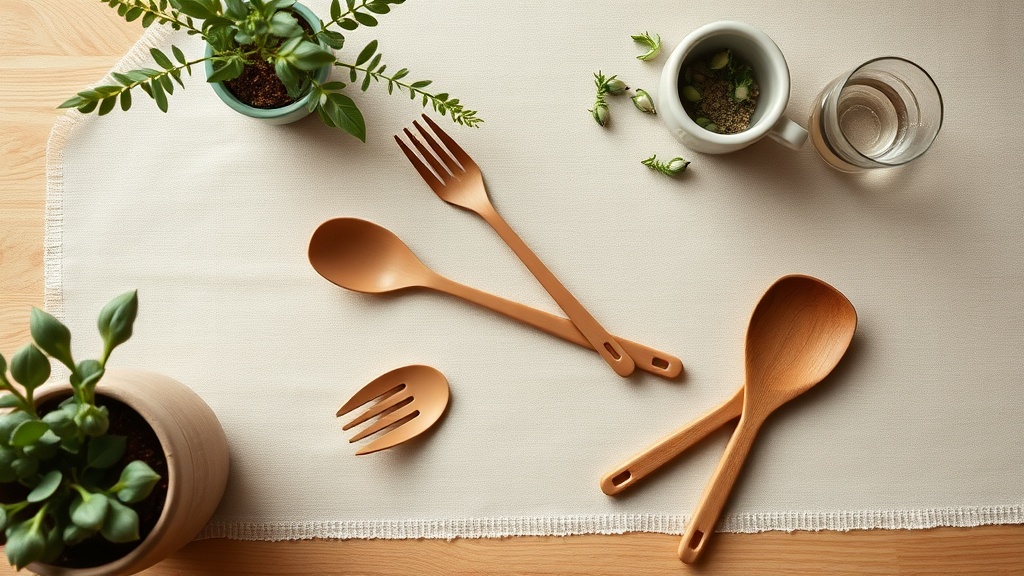
The takeaway: that old plastic spatula you've had for three years may be releasing more chemicals now than when it was new. Heat and wear speed up the process. Glass, stainless steel, and wood utensils don't have this problem because they don't contain leachable additives.
The research at a glance
| Study | Journal | Year |
|---|---|---|
| Development of a Long-term Migration Test Method for Plastic Food Utensils, Containers, and Packaging. | Food Saf (Tokyo) | 2026 |
What to use instead
Browse our vetted, non-toxic alternatives. Every product is third-party certified.
Shop Non-Toxic Kitchen