Do plastic salt and pepper grinders release microplastics into your food?
avoid
What's actually in it
Many salt and pepper grinders use a plastic head as the grinding mechanism. This plastic piece is the part that touches your food the most. It grinds against hard salt crystals or peppercorns hundreds of times per meal. That friction wears down the plastic, breaking off tiny pieces too small to see.
These tiny pieces are called microplastics. They're fragments of the same plastic used to make the grinder. They end up mixed into the salt or pepper that lands on your plate.
What the research says
A 2026 study in Sci Total Environ tested plastic grinder heads to measure how many microplastics they release during salt grinding. The researchers found that the grinding action breaks off measurable amounts of plastic particles from the grinder head.
The particles came in different shapes and sizes. Some were small enough to swallow without noticing. The study confirmed that normal, everyday use of a plastic grinder adds microplastic contamination to your food.
This matters because you use a salt or pepper grinder at almost every meal. The exposure adds up over time. Research on microplastics in general shows they can cause inflammation and cellular stress in the body.
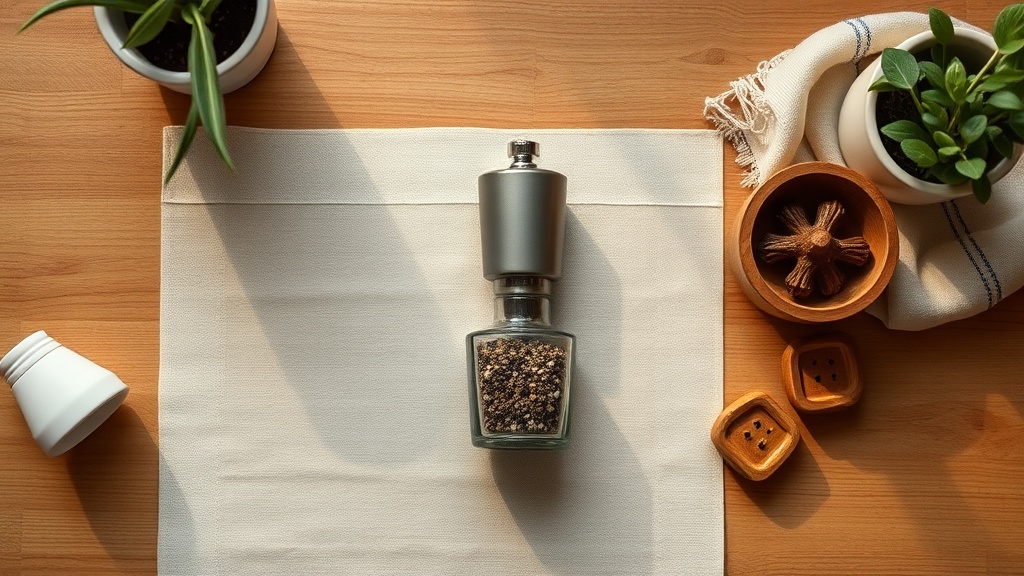
Switching to a grinder with a ceramic or stainless steel grinding mechanism avoids this problem entirely.
The research at a glance
| Study | Journal | Year |
|---|---|---|
| Investigating microplastic release from plastic grinder heads during salt grinding. | Sci Total Environ | 2026 |
What to use instead
Browse our vetted, non-toxic alternatives. Every product is third-party certified.
Shop Non-Toxic Kitchen