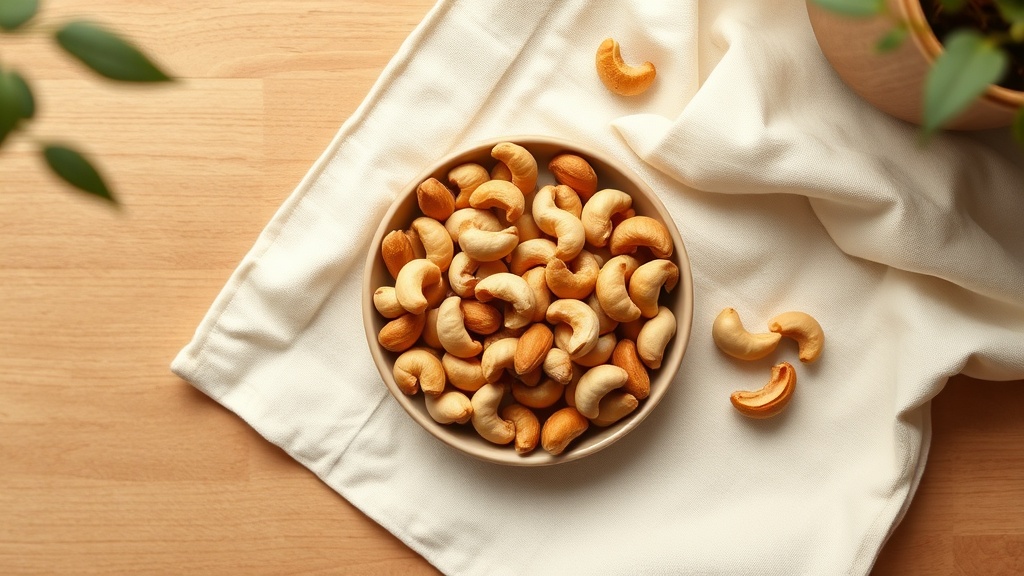
Do roasted cashews and nuts contain acrylamide from high-heat processing?
Yes. Roasting cashews at high temperatures generates acrylamide, a probable carcinogen, along with other harmful heat-created compounds.
What's actually in it
When nuts are roasted at high temperatures, a chemical reaction called the Maillard reaction kicks in. It's the same reaction that browns bread, sears steak, and crisps French fries. It creates flavor, but it also produces acrylamide, 5-HMF, and advanced glycation end products (AGEs).
Acrylamide is classified as a probable human carcinogen. AGEs promote inflammation and have been linked to aging and chronic disease. The darker and crunchier the roast, the more of these compounds form.
What the research says
A 2026 study in J Agric Food Chem measured acrylamide, 5-HMF, and AGEs in cashews roasted at different temperatures and times. Higher roasting temperatures produced sharply higher levels of all three harmful compounds.
The acrylamide levels in heavily roasted cashews were well above what food safety agencies consider low-risk. The same pattern applies to other nuts: almonds, peanuts, and hazelnuts all produce acrylamide when roasted at high heat.
You don't have to give up nuts. Raw or lightly roasted nuts have much lower levels of these compounds. The difference between a "lightly golden" and a "deep brown" roast can mean several times more acrylamide in the finished product. If you buy roasted nuts, look for lighter roasts. Or roast them yourself at lower temperatures for better control.
The research at a glance
| Study | Journal | Year |
|---|---|---|
| Thermal generation of acrylamide, 5-HMF, and AGEs in roasted cashews: Correlation with aroma-active compounds. | J Agric Food Chem | 2026 |
What to use instead
Browse our vetted, non-toxic alternatives. Every product is third-party certified.
Shop Non-Toxic Kitchen