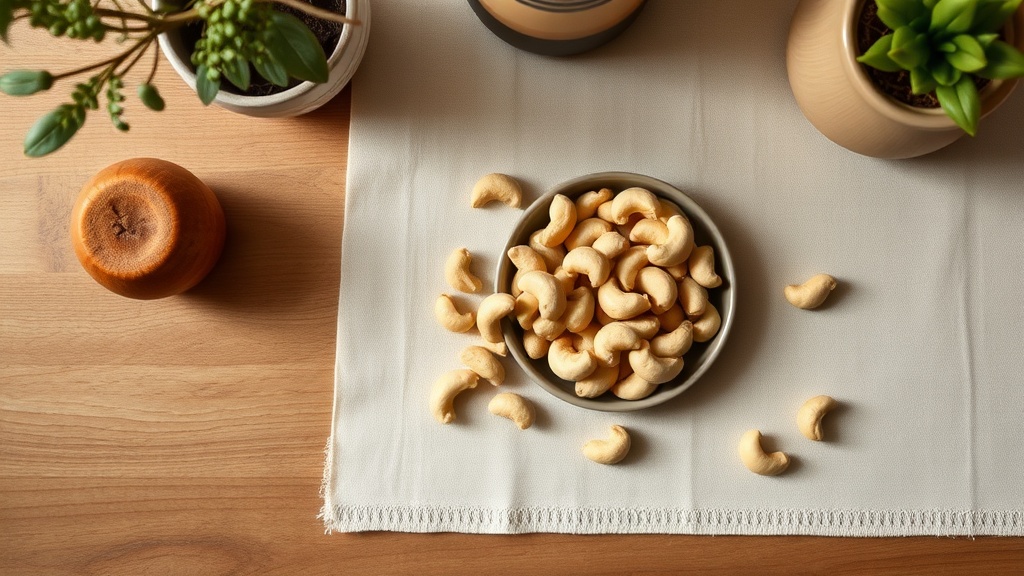
Do roasted cashews and nuts contain acrylamide from the roasting process?
Yes. Roasting creates acrylamide and other harmful compounds in cashews. Higher temperatures produce more.
What's actually in it
When nuts are roasted at high temperatures, a chemical reaction occurs between natural sugars and amino acids in the nut. This is called the Maillard reaction, and it's what creates that toasty, golden flavor. But it also produces unwanted byproducts, including acrylamide, 5-HMF (5-hydroxymethylfurfural), and AGEs (advanced glycation end products).
Acrylamide is classified as a probable human carcinogen. AGEs are linked to inflammation and chronic disease. The higher the roasting temperature and the longer the roasting time, the more of these compounds form.
What the research says
A 2026 study in Food Chem measured exactly how much acrylamide, 5-HMF, and AGEs form in cashews at different roasting conditions. The researchers found a clear pattern: higher temperatures produced significantly more of all three harmful compounds.
The study also looked at how these chemicals correlate with the aroma compounds that give roasted cashews their flavor. Unfortunately, the same conditions that create the best flavor also create the most acrylamide. Lightly roasted cashews had less acrylamide but also less of that deep roasted taste.
This doesn't mean you need to give up roasted nuts entirely. The levels in a single serving are small. But if you eat roasted nuts every day, the exposure adds up. Kids are at higher risk because they weigh less, so the same serving delivers a bigger dose per pound of body weight.
To reduce exposure, choose raw or lightly roasted cashews over dark-roasted ones. Roasting at home at lower temperatures (below 150C/300F) for shorter times also helps. And mixing in raw nuts with roasted ones cuts the overall intake.
The research at a glance
What to use instead
Browse our vetted, non-toxic alternatives. Every product is third-party certified.
Shop Non-Toxic Kitchen