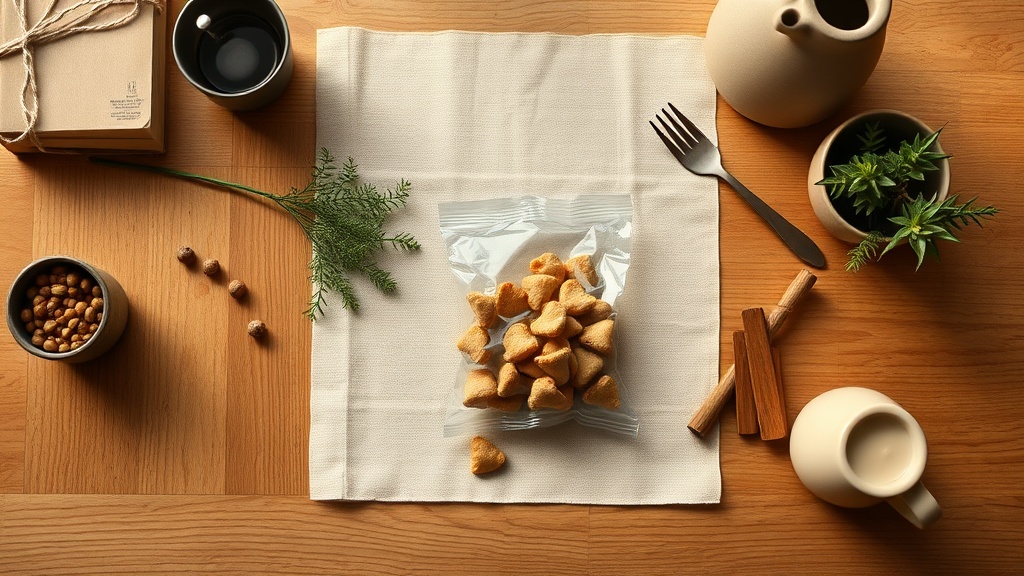
Are chemicals migrating from plastic food packaging into snacks?
avoid
What's actually in it
Plastic containers and packaging are not just sitting there doing nothing. They are active materials that leak substances into your food. This process is known as migration. When you use plastic to store or heat your snacks, you are often consuming more than just the food itself.
These materials contain a mix of chemicals and microplastics that can break down and get into your meals. Research shows that this happens with both petroleum-based plastics and even some plant-based containers. These materials are not stable, and they shed particles and chemical compounds that end up in your body.
What the research says
A 2026 study in J Hazard Mater used non-target screening to identify various substances that migrate from plastic and paper-based food contact materials. The study highlights that these substances are not always known or fully understood, yet they are transferring into the food we consume.
Cooking with plastic is particularly risky. A 2026 study in Food Chem performed high-resolution mass spectrometry to track chemical transfer after cooking. The results confirm that heat causes chemicals to move from the plastic packaging into the food.
a 2026 study in J Hazard Mater characterized the composition of microplastics from various food containers. This research proves that these particles are present and available to be ingested. Because of these risks, scientists are developing new methods to test for long-term migration, as noted in a 2026 study in Food Saf (Tokyo), which emphasizes the need for better safety testing for all plastic food utensils and packaging.
The research at a glance
What to use instead
Browse our vetted, non-toxic alternatives. Every product is third-party certified.
Shop Non-Toxic Kitchen