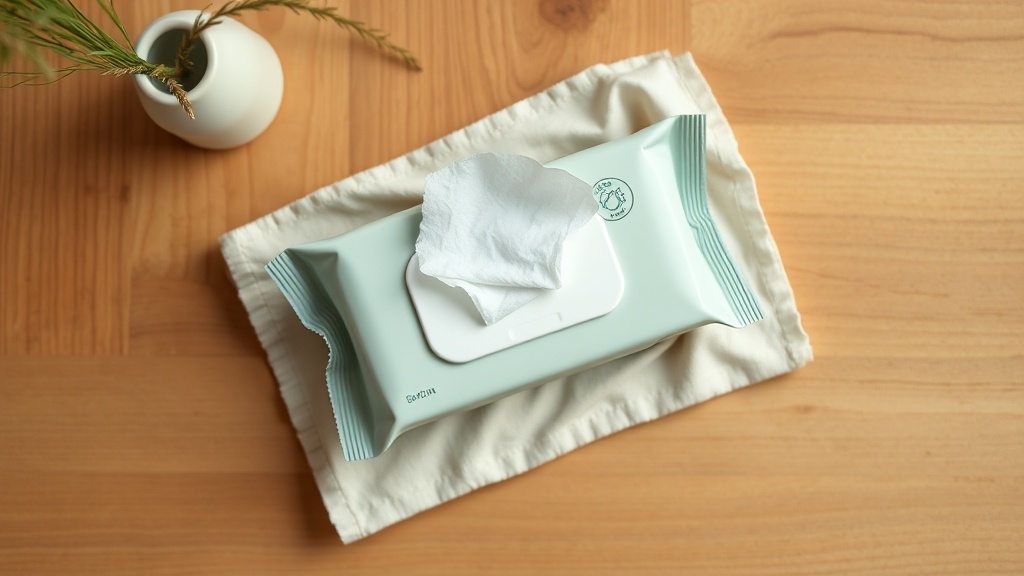
Do wet wipes contain phthalates?
Yes, phthalates have been detected in some wet wipes. Use caution with frequent full-body wiping, and choose short ingredient lists or a washable cloth with water when that works.
Wet wipes are high-frequency baby products. They touch diaper skin, hands, faces, high chairs, and travel messes. When a wipe contains phthalates, fragrance components, or a long list of preservatives, that contact can repeat many times in one day.
The goal is not to shame parents. Disposable wipes are useful. The better habit is to choose simpler formulas and use water plus a washable cloth when that works.
What the evidence says
A PubMed-indexed wet wipe study tested 15 wet wipe samples and detected DEP in all samples. It also found additional phthalate derivatives in 5 samples and undeclared compounds that included possible allergens and irritants. The study supports caution and better labeling.
Better wipe rule
- Choose fragrance-free wipes with short ingredient lists.
- Use a soft washcloth and water for simple cleanups at home.
- Avoid scented wipes for diaper areas and faces.
- Stop using any wipe that causes redness or irritation.
This page fits NonToxCo's baby standard because a washable cloth is a real, low-drama alternative for many everyday cleanups.
The research at a glance
| Study | Journal | Year |
|---|---|---|
| Detection of phthalate compounds in wet wipes using LC-MS/MS: risk assessment and LC-QTOF/MS findings. | J Environ Sci Health A Tox Hazard Subst Environ Eng | 2026 |
What to use instead
For simple cleanups at home, use a soft washcloth with water and save disposable wipes for when they are truly useful.
Shop Non-Toxic Baby