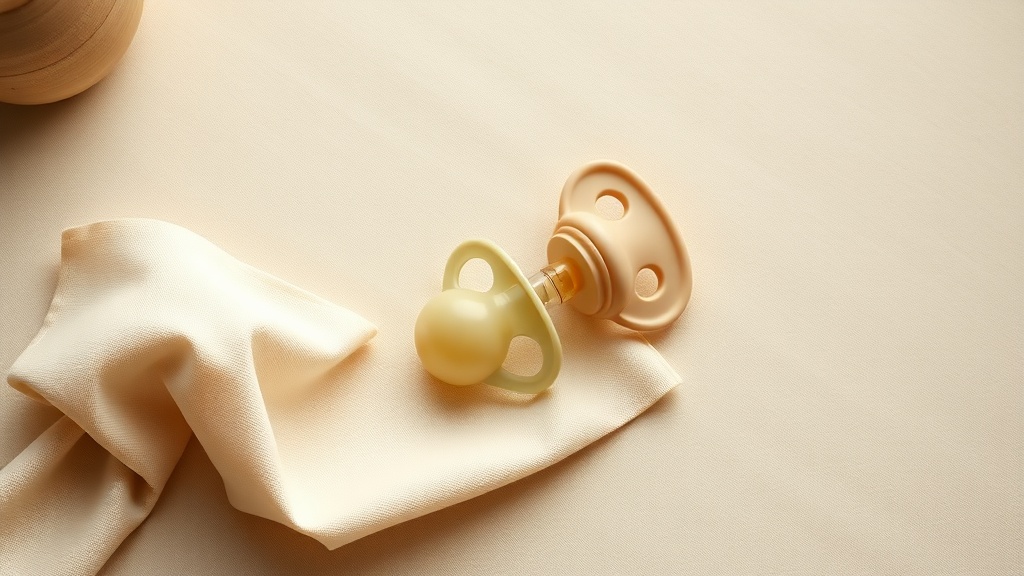
Does using an old pacifier after it's scratched leach more chemicals?
Yes. A 2025 study showed older and damaged kids' products leach significantly more bisphenols.
What's actually in it
Silicone and plastic pacifiers develop tiny cracks and cloudy patches with age, teeth, and boiling. Those damaged surfaces leach more of what's inside the material: bisphenols, siloxanes, and residual monomers.
A baby sucks on a pacifier for hours at a time. The mouth is the most absorptive route after the gut.
What the research says
A 2025 study in Chemosphere tested children's products in a simulated-mouth model and found BPA, BPS, and BPF migrating from hard plastic surfaces, with older and damaged samples leaching more. A 2025 study on silicone confirmed siloxane release from silicone products.
Replace pacifiers every 4 to 6 weeks or at the first sign of stickiness, swelling, or cloudiness. Boil briefly for sterilization, then cool before reuse. Natural rubber pacifiers are a good alternative if no latex allergy.
The research at a glance
| Study | Journal | Year |
|---|---|---|
| Assessing bisphenols migration from children's products on the Swiss market. | Chemosphere | 2025 |
| Silicone bakeware as a source of human exposure to cyclic siloxanes. | J Hazard Mater | 2025 |
What to use instead
Browse our vetted, non-toxic alternatives. Every product is third-party certified.
Shop Non-Toxic Baby