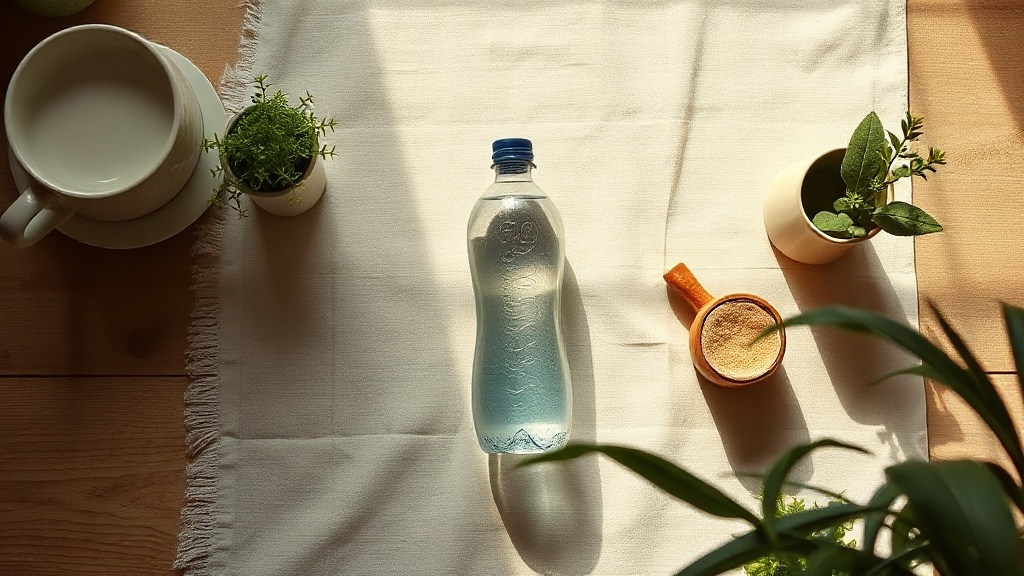
Does squeezing or handling plastic water bottles release more nanoplastics?
Yes. Normal handling and storage of PET bottles significantly increases nanoplastic release into the water.
What's actually in it
PET (polyethylene terephthalate) is the clear plastic in single-use water bottles. Every time you squeeze the bottle, open and close it, or expose it to temperature changes, you stress the plastic. That mechanical stress accelerates the release of nanoplastics. The particles are invisible. You can't see, smell, or taste them. But they're in the water.
Nanoplastics are the smallest plastic fragments, under 1 micrometer. They cross biological barriers in the body more easily than larger microplastics.
What the research says
A 2026 study in Water Res measured nanoplastic release from PET bottled water under everyday storage and handling conditions. Squeezing, opening and closing, and temperature exposure all significantly increased nanoplastic particle counts in the water. The nanoplastics produced during normal use were small enough to be absorbed by gut cells.
Every time you grip and drink from a plastic bottle, you're releasing more particles into your drink. Reusing single-use plastic bottles makes it progressively worse as the plastic degrades with repeated handling.
Switch to stainless steel alternatives for water. Stainless doesn't flex, doesn't shed particles, and keeps your water cold without the plastic problem.
The research at a glance
| Study | Journal | Year |
|---|---|---|
| Everyday storage and handling of PET bottled water increase human exposure to nanoplastics | Water Res | 2026 |
What to use instead
Browse our curated non-toxic alternatives. Every product is third-party certified.
Shop Non-Toxic Kitchen