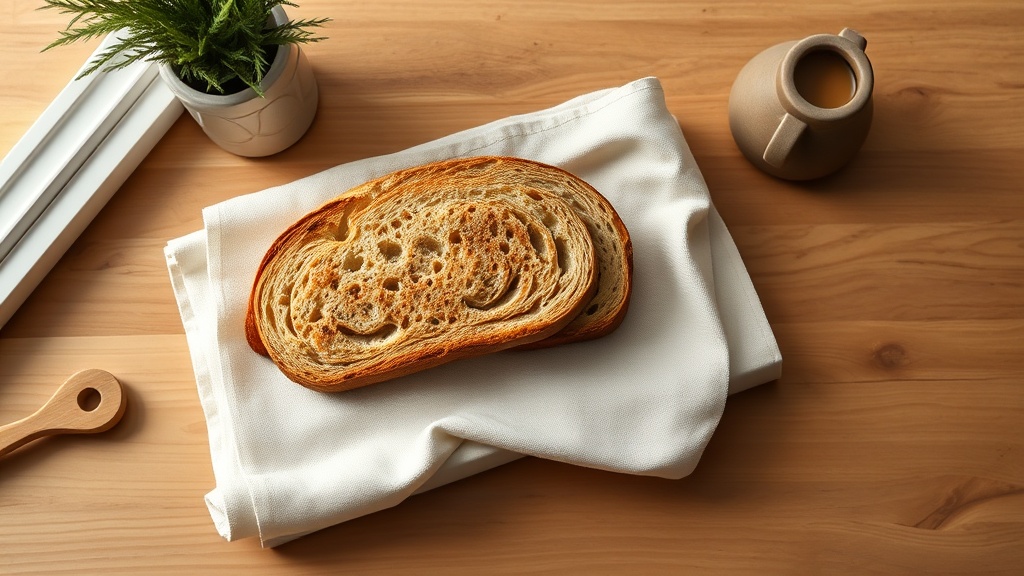
Does toasting bread or baking at home create acrylamide, and is it harmful?
Yes, toasting and baking produce acrylamide. The darker the toast, the more acrylamide it contains. Long-term exposure at high levels is linked to cancer in animals.
What's actually in it
Acrylamide forms when starchy foods are heated above about 120°C (248°F). It's a byproduct of the Maillard reaction, the same chemical process that gives toast, french fries, and baked goods their golden-brown color and crispy texture. The amino acid asparagine reacts with sugars at high temperatures, and acrylamide is one of the results.
You can't see it or taste it. It's not something added to food. Your toaster, oven, and stovetop create it every time you brown starchy food. The darker the browning, the more acrylamide. A lightly golden piece of toast has less than a charred one.
What the research says
A 2026 review in Toxics pulled together research on acrylamide in food, from how it forms to what it does in the body. The evidence is clearest in animal studies: rats fed acrylamide developed tumors at multiple sites, and the International Agency for Research on Cancer classifies acrylamide as a "probable human carcinogen."
In humans, the picture is less clear-cut. Epidemiological studies haven't found a strong, consistent link between dietary acrylamide and cancer. But the doses humans get from food are much lower than what lab animals received, and long-term effects are hard to measure in population studies.
What's not debated: acrylamide is neurotoxic at high doses. Workers exposed to acrylamide in industrial settings have developed nerve damage. At the levels found in food, the concern is more about cancer risk than acute toxicity.
The foods with the highest acrylamide levels include french fries, potato chips, dark toast, coffee, and crispy baked goods. Toast is a daily exposure source for many families. Kids tend to get proportionally more acrylamide per pound of body weight because they eat more relative to their size.
You don't need to stop toasting bread. But aim for golden yellow, not dark brown. Shorter toasting times and lower temperatures cut acrylamide levels. Soaking potatoes in water before frying also helps.
The research at a glance
| Study | Journal | Year |
|---|---|---|
| Acrylamide in Food: From Maillard Reaction to Public Health Concern. | Toxics | 2026 |
What to use instead
Browse our vetted, non-toxic alternatives. Every product is third-party certified.
Shop Non-Toxic Kitchen