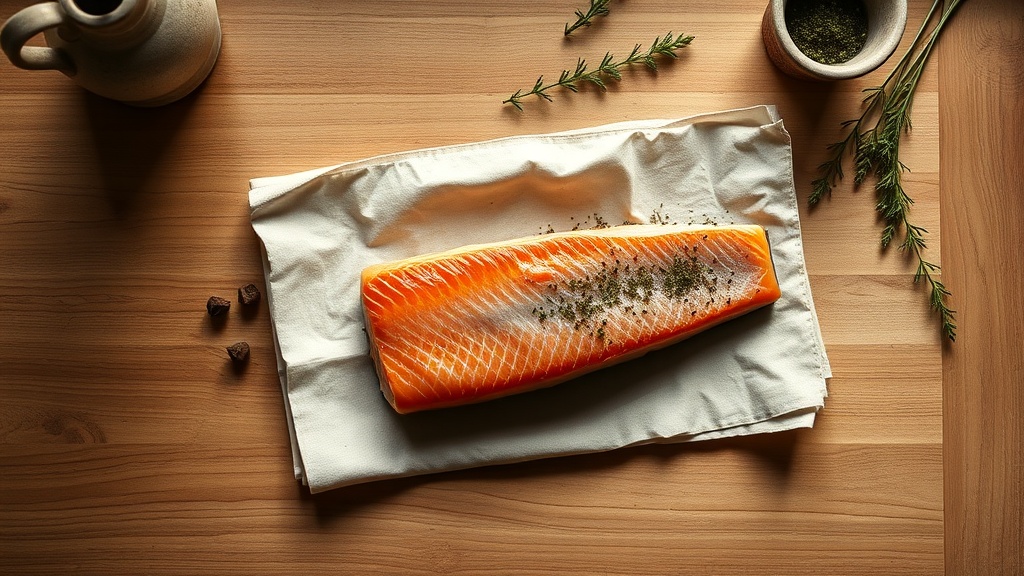
Is it safe to eat farmed salmon once a week?
Once a week is fine if the source is clean. Farmed salmon carries PFAS from the feed.
What's actually in it
Salmon is worth eating. Omega-3 fats, complete protein, vitamin D, and B12 all show up in a single filet. The catch is that salmon sits near the top of the aquatic food web, and whatever chemicals are in the water and the feed concentrate in the fat. Farmed salmon is usually fattier than wild, which means more omega-3s and more fat-soluble contaminants.
PFAS (the "forever chemicals" from nonstick coatings and firefighting foam) bind to fish protein and build up. Farm pellets are often made from smaller fish that have already accumulated PFAS from river and ocean pollution.
What the research says
A 2026 study in Environ Pollut tested PFAS levels in fish and water across the UK and Spain. Farmed species, including salmon, carried measurable PFAS in almost every sample. The exposure per serving was enough to bump a regular eater's weekly intake into the range where health effects become plausible: for PFAS, that includes reduced vaccine response, altered cholesterol, and reproductive effects.
One serving a week of salmon is still a good trade for most people. The mix that cuts the PFAS load without losing the benefits is to vary the fish: salmon, then sardines or anchovies (low on the food chain, very low PFAS), then a white fish like cod. Trim visible fat before cooking: most PFAS live in the fat. And skip salmon sold in plastic packaging when possible, since packaging adds its own chemicals on top.
The research at a glance
| Study | Journal | Year |
|---|---|---|
| Assessment of PFAS pollution in fish and water from the United Kingdom and Spain and implications for human exposure. | Environ Pollut | 2026 |
What to use instead
Browse our vetted, non-toxic alternatives. Every product is third-party certified.
Shop Non-Toxic Kitchen