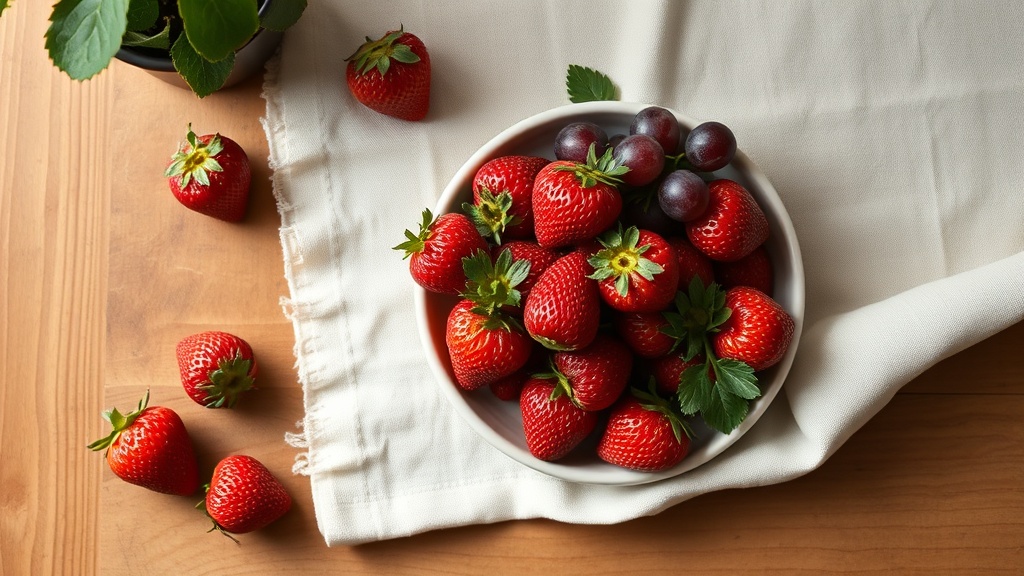
Is it safe to eat strawberries and grapes that aren't the EWG Dirty Dozen organic?
Not really for daily eating. These are the worst offenders for pesticide residue.
What's actually in it
Strawberries and grapes are consistently among the most pesticide-contaminated produce in EWG testing. They rank 1 and 2 on the Dirty Dozen year after year. The fruits have porous surfaces, no protective peel, and are often sprayed multiple times during the growing season. Both are popular year-round with adults and kids.
The combination of multiple pesticides plus frequent consumption is what makes these two stand out.
What the research says
The same 2026 study in J Hazard Mater on chronic low-dose pesticide cocktail exposure and IBD susceptibility identified strawberries as among the biggest dietary sources of the problematic cocktails. A 2026 review in Rev Environ Health on triazole fungicides also found these fruits among the heaviest-treated.
If budget limits where you go organic, start with strawberries and grapes. Frozen organic strawberries are usually cheaper than fresh organic and work perfectly for smoothies, oatmeal, and baking. For grapes, small organic bags aren't much more than conventional. A baking soda soak before eating (1 tsp baking soda per bowl of water, 2 minutes, then rinse) reduces surface residue for anyone still buying conventional.
The research at a glance
What to use instead
Browse our vetted, non-toxic alternatives. Every product is third-party certified.
Shop Non-Toxic Kitchen