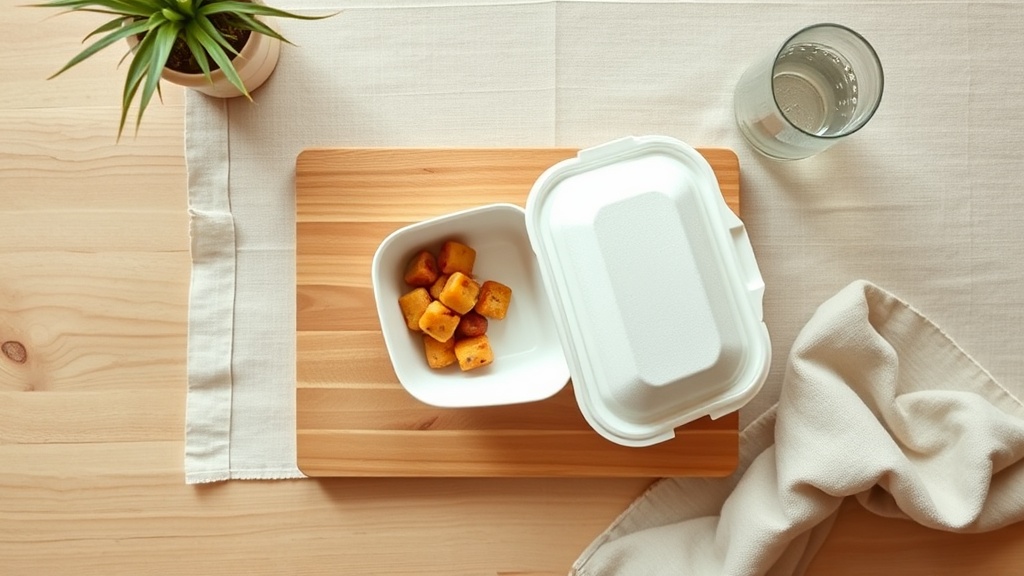
Is it safe to eat styrofoam takeout daily while trying to conceive?
Avoid daily hot food in styrofoam. Polystyrene microplastics are linked with fertility harm in animal data.
Short answer
Avoid making this a daily habit, especially while trying to conceive. Styrofoam is expanded polystyrene. Hot, oily, or acidic food can pull styrene and tiny plastic pieces from the foam into the meal.
One takeout meal is not a reason to panic. Daily hot food in foam is the pattern to change.
What the research says
A 2026 Scientific Reports rat study tested low oral doses of polystyrene microplastics for 45 days. Exposed male rats had lower sperm count and motility, lower testosterone, more abnormal sperm, oxidative stress, inflammation, and testicular tissue damage. The effects were dose-dependent.
This is animal research, so it does not prove the same effect in people eating takeout. It does support a cautious rule for fertility: reduce regular contact between hot food and polystyrene.
What to do instead
Move hot takeout into a glass, ceramic, or stainless steel container when you get home. Reheat in ceramic or glass, not in the takeout box. If a restaurant lets you bring your own clean container, use glass or stainless steel. For delivery, choose places that use paperboard or foil instead of foam when you can.
The research at a glance
| Study | Journal | Year |
|---|---|---|
| Impact of polystyrene microplastic exposure at low doses on male fertility: an experimental study in rats. | Sci Rep | 2026 |
What to use instead
Shop glass kitchen storage for transferring takeout and leftovers.
Shop Non-Toxic Kitchen