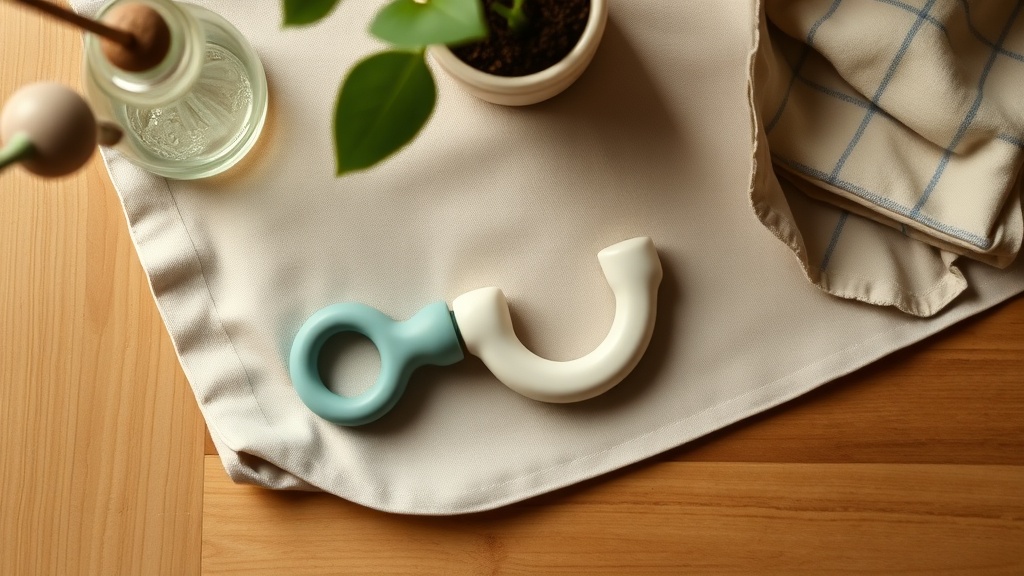
Is it safe to give a teething baby a polypropylene teether that looks medical-grade?
Not reliably. Even polypropylene teethers leach bisphenols during chewing.
What's actually in it
Plastic teethers, even ones labeled "medical-grade polypropylene" or "hospital-grade," contain additives, lubricants, and sometimes bisphenol residues from manufacturing. Babies chew on teethers for hours, producing friction heat and saliva exposure that leaches these chemicals. Unlike adult products, teethers get the most intense use-mode of any consumer plastic.
Silicone, wood, or frozen washcloth teethers skip most of the issue.
What the research says
A 2026 study in Chemosphere measured bisphenol migration from children's products using simulated oral exposure. Multiple teether designs, including ones marketed as safe, released detectable bisphenols at levels that exceeded tolerable intake for regular use. Product labels didn't predict real migration.
Better teething options: a frozen wet washcloth (tied in a knot to give shape), unfinished wooden teething rings (maple or beechwood from dedicated makers), food-grade silicone teethers with platinum-cured verification, or a chilled banana or cucumber in a mesh feeder. Avoid PVC, unknown plastic, and imported products without clear material specifications. When silicone is used, stick with well-known brands (Comotomo, Oli and Carol, Kinto) and replace at first sign of wear.
The research at a glance
| Study | Journal | Year |
|---|---|---|
| Assessing bisphenols migration from children's products on the Swiss market: simulated oral exposure and risk implications. | Chemosphere | 2026 |
What to use instead
Browse our vetted, non-toxic alternatives. Every product is third-party certified.
Shop Non-Toxic Baby