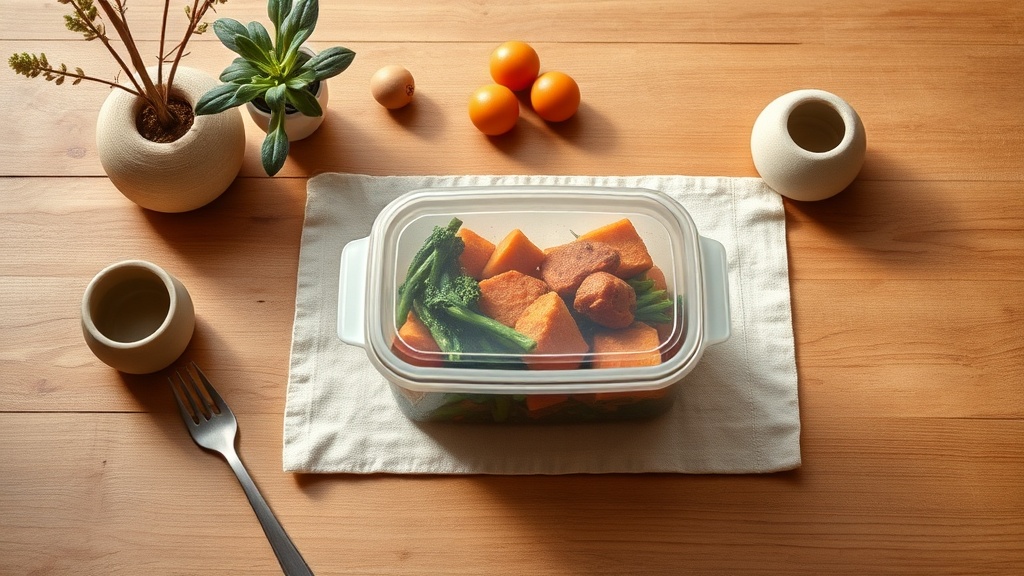
Is it safe to heat up leftovers in a plastic Tupperware?
Avoid microwaving leftovers in plastic containers. Move food to glass, ceramic, or porcelain first.
What's actually in it
Many reusable food containers are polypropylene or polyethylene. They may hold their shape in the microwave, but that does not mean heating food in them is the best choice.
Hot, fatty, and acidic leftovers are harder on plastic than dry, room-temperature foods.
What the research says
A 2023 Environmental Science and Technology study found microwave heating caused the highest release of microplastics and nanoplastics from plastic containers and reusable food pouches among tested use scenarios.
A 2021 Journal of Hazardous Materials study found intentionally added substances, non-intentionally added substances, and microplastics migrated from microwavable plastic food containers into food simulants.
Practical takeaway: store leftovers in glass when you can. If leftovers are already in plastic, move them to a glass, ceramic, or porcelain dish before reheating.
The research at a glance
What to use instead
For leftovers, use glass storage so food does not need to be reheated in plastic.
Shop Non-Toxic Kitchen