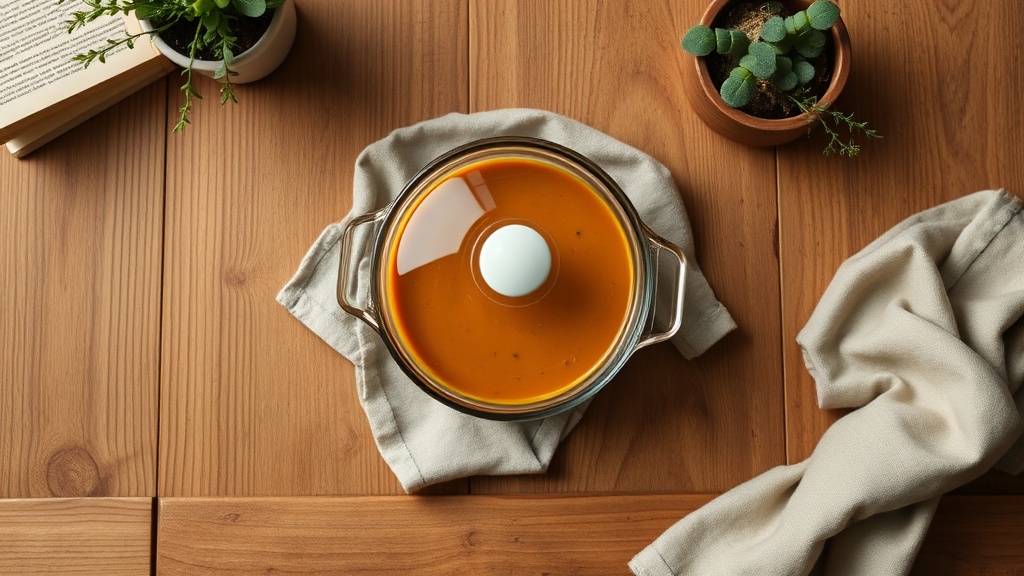
Is it safe to microwave soup in a Pyrex bowl with the plastic lid on?
Avoid microwaving with the plastic lid on. The glass bowl is fine, but hot steam can turn the lid into plastic food contact.
Short answer
No. Microwave the soup in the glass bowl, but take the plastic lid off first. The glass is the good part. The lid is usually polypropylene or another plastic, and hot steam can make it a food-contact surface.
If you need a cover, use a ceramic plate, a glass plate, or unbleached parchment. Put the plastic lid back on only after the food cools for storage.
What the research says
A 2023 Food Chemistry study looked at cooking food in microwavable plastic containers. The researchers found that plastic migrants from food-contact materials can react with food components during microwave cooking. They also found polypropylene glycol substances transferring into food during microwave cooking.
This study tested plastic containers, not a Pyrex lid specifically. It still supports the practical rule: keep hot food and microwave steam away from plastic when glass or ceramic can do the job.
What to do at home
Use the Pyrex bowl without the lid. Cover splatter with a ceramic plate or glass plate. Leave a vent so steam can escape. Store leftovers in glass after they cool, and keep the plastic lid out of the microwave.
The research at a glance
What to use instead
Shop glass kitchen storage for reheating without plastic contact.
Shop Non-Toxic Kitchen