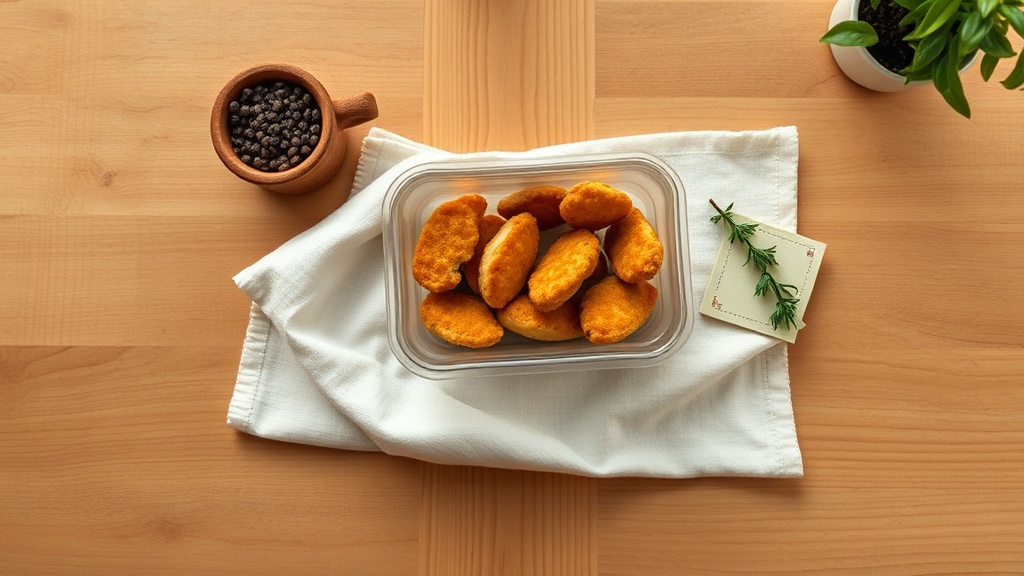
Is it safe to reheat chicken nuggets in their plastic-lined microwave container?
No. Move food to glass or ceramic before microwaving.
What's actually in it
Many frozen meals, nuggets, and snack foods come in trays or sleeves with plastic coatings. Some are plastic containers. Others are paper or cardboard with a plastic lining. Microwave heat puts that material in direct contact with hot, oily food.
The safer habit is simple: move food to glass, ceramic, or stainless steel for oven use before heating. Do not microwave food in plastic-lined packaging.
What the research says
A 2024 study in Journal of Hazardous Materials tested disposable paper cups and microwavable food containers coated with LDPE and PLA. The study found nanoplastic release from coated containers, and higher microwave power increased release from microwavable food containers.
A 2023 study in Environmental Science & Technology found microwave heating caused the highest release of microplastics and nanoplastics from plastic containers and reusable food pouches compared with room-temperature or refrigerated storage.
For nuggets or leftovers, use a glass storage dish, a ceramic plate, or an oven-safe stainless steel tray. If the package says microwave-ready, that means it heats food. It does not mean it is the lowest-exposure choice.
The research at a glance
| Study | Journal | Year |
|---|---|---|
| Nanoplastics from disposable paper cups and microwavable food containers. | J Hazard Mater | 2024 |
| Assessing the Release of Microplastics and Nanoplastics from Plastic Containers and Reusable Food Pouches: Implications for Human Health. | Environ Sci Technol | 2023 |
What to use instead
For reheating and storing food, glass containers are the cleaner everyday default.
Shop Non-Toxic Kitchen