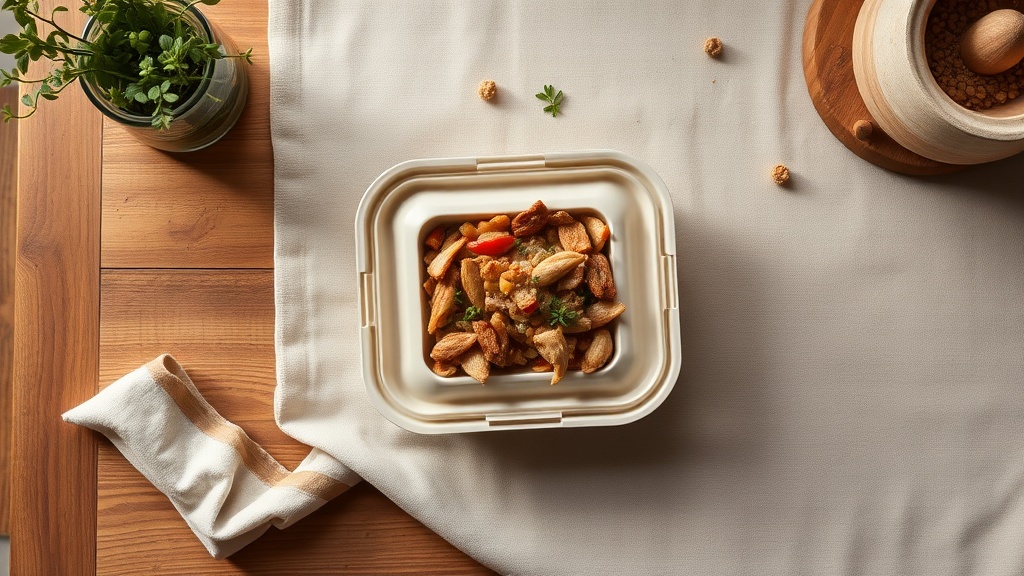
Is it safe to store hot leftovers in a plastic takeout container overnight?
Do not put hot leftovers straight into plastic takeout containers. Heat raises plastic particle release, so use glass storage when food is still warm.
What's actually in it
Most takeout containers are polypropylene, polystyrene, PET, or PLA. They are made for short contact with food, not for storing hot leftovers all night.
Heat softens plastic surfaces and can raise the release of tiny plastic particles. Time matters too, but the strongest evidence here is about hot contact and heating.
What the research says
A 2024 Journal of Hazardous Materials study tested plastic takeaway containers under routine-use conditions, including hot water and microwave treatments. Containers made from polystyrene, polypropylene, PET, and PLA released microplastics. Leachates and released particles reduced cell viability in human intestinal Caco-2 cells in lab tests.
A 2023 Food Additives & Contaminants study tested polypropylene, polyethylene, and expanded polystyrene takeout containers after hot water treatment. It found microplastics from all 3 container types, and over 96% of released particles were smaller than 10 micrometers.
A 2025 Journal of Agricultural and Food Chemistry study found polypropylene food storage containers released more nanoplastics after a 90 C rinse than after room-temperature rinsing.
Move hot leftovers into glass storage jars or containers. If you only have the takeout box, let food cool on a plate first, then transfer. Do not microwave in the takeout container.
The research at a glance
| Study | Journal | Year |
|---|---|---|
| Plastic takeaway food containers may cause human intestinal damage in routine life usage: Microplastics formation and cytotoxic effect. | J Hazard Mater | 2024 |
| Analysis of microplastics released from plastic take-out food containers based on thermal properties and morphology study. | Food Addit Contam Part A Chem Anal Control Expo Risk Assess | 2023 |
| Release of Nanoplastics from Polypropylene Food Containers into Hot and Cold Water. | J Agric Food Chem | 2025 |