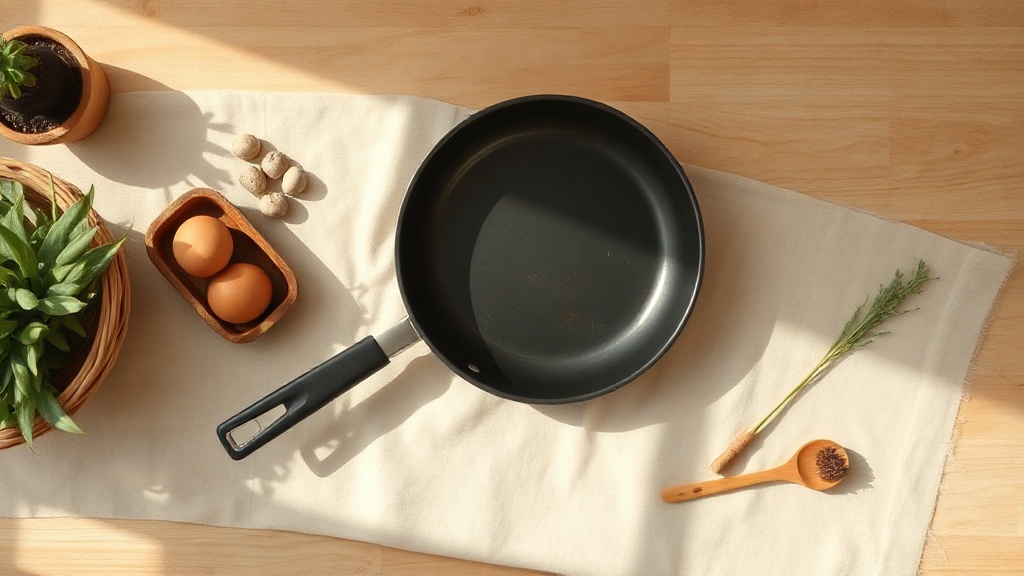
Is it safe to use a scratched nonstick pan?
Avoid. Scratched nonstick coatings shed PFAS particles and flakes directly into food. A scratched pan should be replaced immediately.
What's actually in it
Nonstick pans are coated with PTFE (polytetrafluoroethylene), the polymer also known as Teflon. This coating contains and is made from PFAS chemistry. When the coating is intact and used below 260C, migration is relatively low. When the coating is scratched, chipped, or peeling, the damaged surface sheds particles directly into food during cooking.
A visible scratch means the coating is already compromised. Every meal cooked in a scratched pan releases coating fragments that you eat along with the food.
What the research says
A 2026 study in Environ Res found that higher PFAS blood levels are associated with increased metabolic syndrome risk, confirming that dietary PFAS from cookware is a meaningful exposure pathway. Researchers consistently identify cooking surfaces as a primary food-contact PFAS source.
The Australian Science Media Centre published modeling showing that a single scratch on a nonstick pan can shed thousands of microplastic and nanoplastic PTFE particles per cooking event. Even without a full scratch, normal use degrades the coating over time.
The research at a glance
| Study | Journal | Year |
|---|---|---|
| PFAS and metabolic syndrome risk | Environ Res | 2026 |
What to use instead
Browse our curated non-toxic alternatives. Every product is third-party certified.
Shop Non-Toxic Kitchen