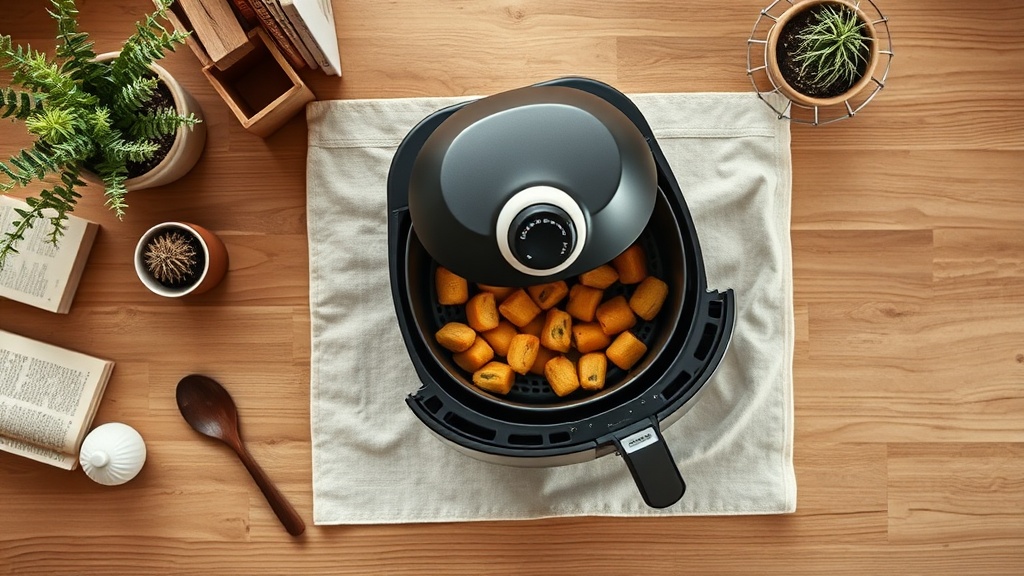
Is it safe to use an air fryer in the kitchen without ventilation?
Use ventilation. Air fryers can release VOCs and ultrafine particles, especially with high-fat foods.
What is in it
An air fryer is a small convection oven. It heats food fast and blows hot air across the surface. That can release VOCs, nitrogen oxides, and ultrafine particles, especially from fatty or breaded foods.
The appliance also matters. Old food residue inside the air fryer can add to emissions even when there is no food cooking.
What the research says
A 2026 ACS ES&T Air chamber study measured emissions while air frying 12 dishes. Emissions varied by food. High-fat foods produced ultrafine particle levels comparable to deep frying after scaling, while many other foods were lower than conventional frying.
The study also found that residue after more than 70 uses increased VOCs by 23% and ultrafine particles by 236% during empty runs. Use the air fryer near ventilation, open a window, avoid burning crumbs, and clean hidden residue as well as the basket.