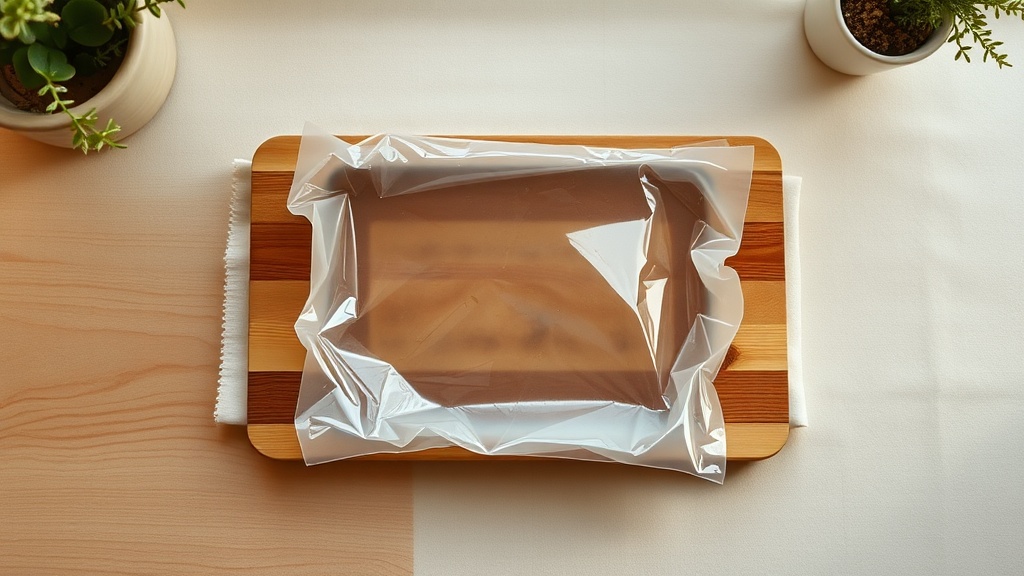
Is it safe to use cheap plastic wrap on hot food for meal prep?
Avoid direct contact with hot food. Heating food in plastic packaging increases chemical transfer.
What is in it
Plastic wrap and plastic food packaging are made from plastics such as LDPE, HDPE, or PVC. These materials can include plasticizers and other additives. Heat and fat make transfer easier.
Plastic wrap on a cool sandwich for a short time is a lower concern. Plastic wrap touching hot soup, pasta, or oily leftovers is a habit to change. Let food cool first, then cover it. For hot meal prep, use a glass container with a lid or another container made for heat.
What the research says
A 2026 Food Chemistry study tested six foods before and after cooking in plastic packaging. The study found 35 intentionally added substances and 3 non-intentionally added substances. Several chemicals moved into food after contact, and transfer increased after cooking.
The same study found that LDPE packaging showed more transferred plasticizers. It also flagged compounds of concern, including benzylbutyl phthalate and butylated hydroxytoluene. This supports a clear rule at home: keep hot food and plastic wrap apart.