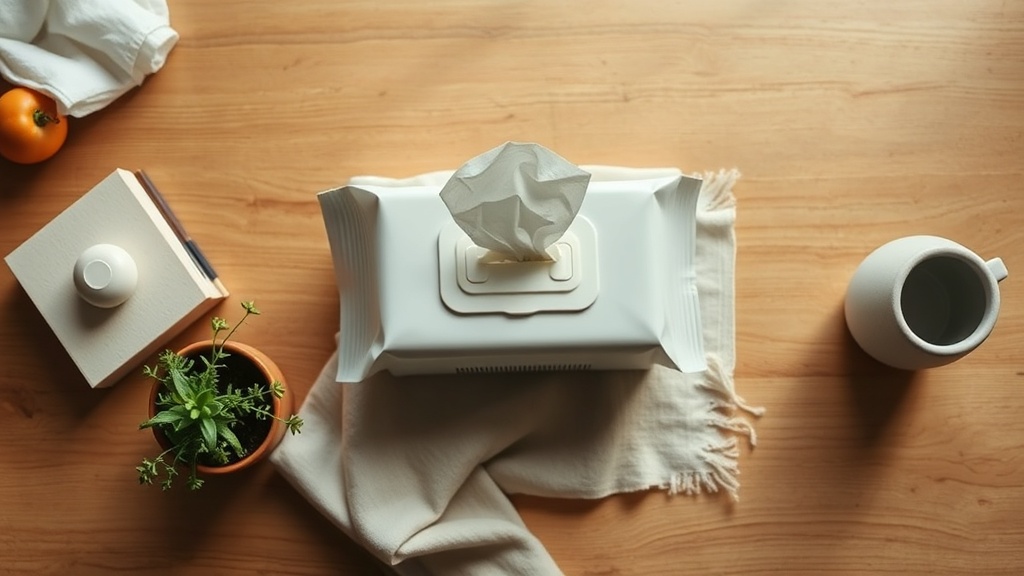
Is it safe to use disinfecting wipes daily to clean an elderly parent's room?
Use caution. Daily disinfecting wipes can raise quaternary ammonium compound exposure in indoor dust and air.
Short answer
Use caution. Disinfecting wipes are helpful when someone is sick or when you need to clean body fluids. They should not be the daily default for every surface in an older person's room.
Most disinfecting wipes use quaternary ammonium compounds, also called QACs or quats. These chemicals can stay in dust, air, and surface residue after cleaning.
What the research says
A 2026 Environmental Science & Technology study measured 19 QACs in assisted living facilities. The team found QACs in indoor dust, air, and wristbands worn by residents and staff. Dust levels in assisted living were several times higher than levels previously reported in U.S. homes. The study also found that accidental dust ingestion was the largest estimated intake route.
The study did not prove that one wipe causes illness. It does show that heavy disinfectant use can leave measurable QAC exposure in places where older adults spend a lot of time.
What to do at home
Use soap, water, and washable cloths for routine dust, spills, and bedside surfaces. Save disinfectants for high-risk moments: illness, bathroom germs, raw meat cleanup, or body fluids. When you disinfect, follow the label, ventilate the room, and keep food, pillows, and skin-contact fabrics away from wet residue.
The research at a glance
| Study | Journal | Year |
|---|---|---|
| Exposure to Quaternary Ammonium Compounds (QACs) in Assisted Living Facilities: Implications for Older Adults. | Environ Sci Technol | 2026 |
What to use instead
Shop home disinfectant options for targeted use, not daily wipe-downs.
Shop Non-Toxic Home