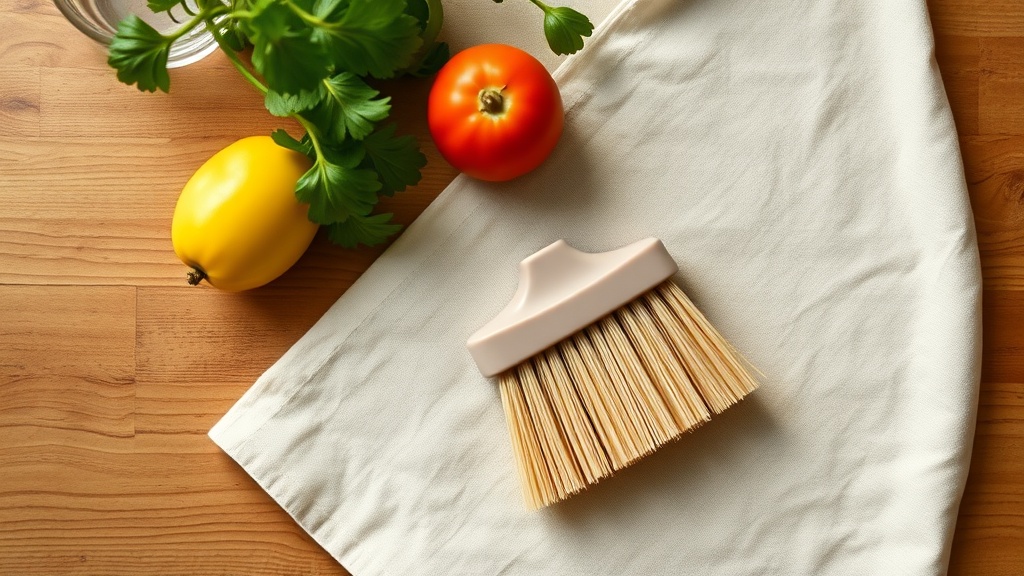
Is it safe to eat fresh produce washed with the same plastic-bristled brush for years?
No. Replace worn plastic brushes, and use a clean brush only for firm produce.
Short answer
Do not keep a worn plastic produce brush for years. Replace it when the bristles bend, fray, smell, trap food, or feel rough. A brush that touches food should be clean and intact.
What can go wrong
Many produce brushes use nylon or polypropylene bristles. Scrubbing creates abrasion. Over time, bristles wear down, trap food, and become harder to clean. That is not the tool you want touching potatoes, carrots, apples, or cucumbers.
What the research says
A 2026 Toxics review reported that kitchen utensils and other consumer products can release microplastics through mechanical abrasion, heat, and leaching. The review also says direct causal evidence in humans is limited. So we should not claim an old produce brush adds a proven measured dose to every meal.
FDA produce guidance says to use a clean vegetable brush for firm produce, such as melons and cucumbers. Clean and intact is the point.
What to do
Use your hands for berries, leafy greens, and soft fruit. Use a clean brush only for firm produce. Let the brush dry between uses. Replace plastic bristles when they wear down. If you want less plastic touching food, choose a wood-handled brush with natural-fiber bristles and replace it when it frays.
The research at a glance
| Study | Journal | Year |
|---|---|---|
| From Kitchen to Cell: A Critical Review of Microplastic Release from Consumer Products and Its Health Implications. | Toxics | 2026 |
| 7 Tips for Cleaning Fruits, Vegetables | FDA Consumer Updates | 2026 |