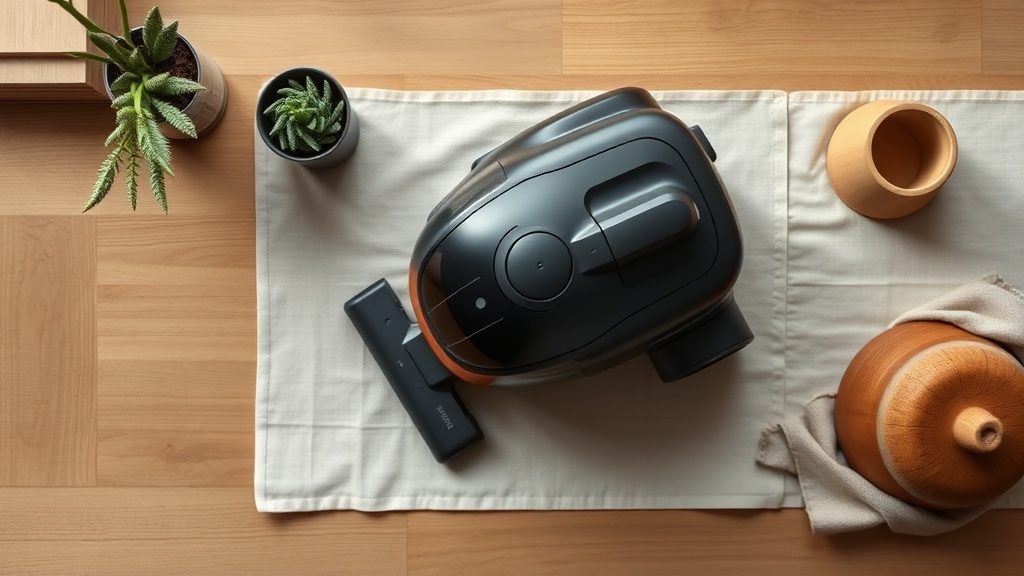
Is it safe to vacuum without a HEPA filter when a baby is crawling?
No. A cheap vacuum blows fine plastic dust back into the air where the baby breathes.
What's actually in it
House dust isn't dirt. It's shed skin, pet dander, and microplastic fibers from carpets, couches, and synthetic clothing. Polystyrene is common, along with polyester and nylon. Babies live on the floor, so they breathe the air right above the carpet. That air has 2 to 10 times more particles than adult breathing zone air.
A standard vacuum stirs dust up faster than it captures it. The bag or bin holds the big stuff. The tiny particles, the ones small enough to reach deep lung tissue, blow right through a basic filter and out the exhaust.
What the research says
A 2026 study in Ecotoxicol Environ Saf exposed mice to airborne polystyrene nanoplastics at household-relevant levels. The mice developed splenic cell senescence and immune imbalance: the immune system aged and got worse at responding to threats. The exposure route matters here. It was inhalation, not ingestion, and the dose was what you'd pick up just by breathing.
A HEPA filter blocks 99.97% of particles down to 0.3 microns. That's the size range where plastic fibers and nano-sized particles live. Look for a vacuum that says "sealed HEPA" on the box: sealed means the air goes through the filter instead of leaking around it. Run the vacuum when the baby is in another room, and wait 20 minutes before crawling time.
The research at a glance
| Study | Journal | Year |
|---|---|---|
| Airborne polystyrene nanoplastic exposure leads to splenic cell senescence and immune imbalance. | Ecotoxicol Environ Saf | 2026 |
What to use instead
Browse our vetted, non-toxic alternatives. Every product is third-party certified.
Shop Non-Toxic Baby