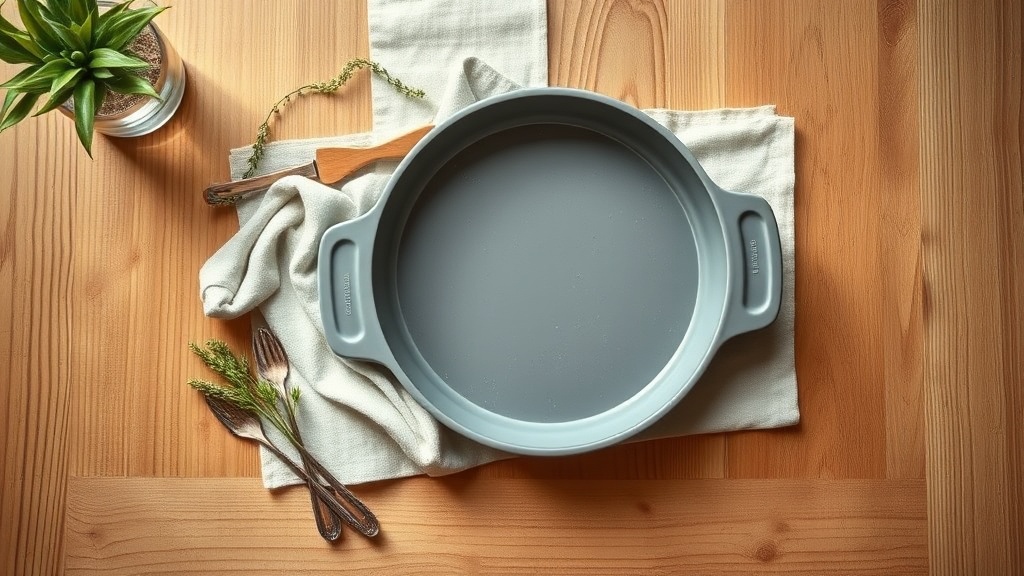
Is silicone safer than nonstick for a baby's baking pan?
Not really. Silicone bakeware leaks siloxanes into baby food, while nonstick sheds PTFE and PFAS. Both are imperfect picks.
What's actually in it
Nonstick bakeware is coated with PTFE, which sheds tiny particles and releases PFAS when scratched or overheated. Silicone bakeware is polydimethylsiloxane, which traps ring-shaped molecules called cyclic siloxanes (D4, D5, D6) during manufacturing. Siloxanes come out of the mold and into whatever is baking inside it.
For baby food, every ingredient gets multiplied: a baby eats the same muffin as part of a small total diet, so the dose per pound is higher than for an adult.
What the research says
A 2025 study in J Hazard Mater tested silicone bakeware at normal oven temperatures and detected D4, D5, and D6 in both the baked food and the kitchen air. D4 is classed as a reproductive toxin; D5 affects the liver in animal studies. Babies took in the highest dose per pound because of their size.
Neither silicone nor nonstick is the best baby baking pan. The cleanest choices are stainless steel, glass, or uncoated heavy aluminum with parchment paper on top. Parchment keeps the food from sticking without any coating leaching into it.
The research at a glance
| Study | Journal | Year |
|---|---|---|
| Silicone bakeware as a source of human exposure to cyclic siloxanes via inhalation and baked food consumption. | J Hazard Mater | 2025 |
What to use instead
Browse our vetted, non-toxic alternatives. Every product is third-party certified.
Shop Non-Toxic Baby