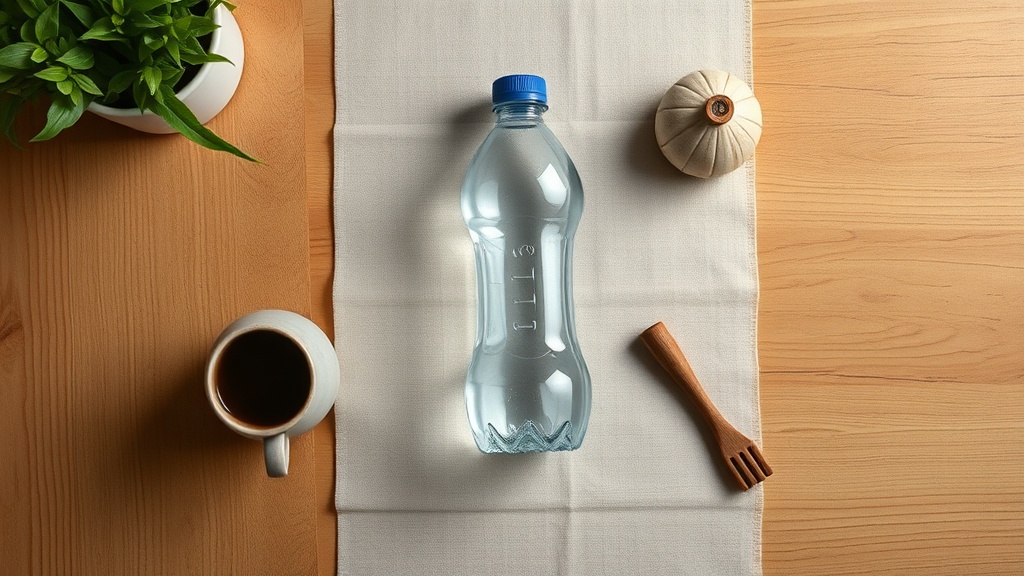
Should men avoid plastic water bottles while trying to conceive?
Use caution. Male preconception bisphenol exposure has been linked with worse IVF outcomes, so glass and stainless steel are smarter defaults.
Short answer
Yes, it is smart to reduce plastic drink contact while trying to conceive. That does not mean one plastic bottle ruins fertility. It means daily bisphenol exposure is worth cutting during the 2 to 3 months when sperm develop.
The biggest concern is BPA and BPF, which are used in some plastics, coatings, and thermal paper. Single-use PET water bottles are not the only source. The practical move is to use glass or stainless steel for daily drinks and avoid heat on plastic.
What the research says
A 2026 International Journal of Hygiene and Environmental Health study measured paternal urinary BPA and BPF before IVF. Men in the highest BPA quartile had a lower adjusted fertilization rate and lower probability of live birth than men in the lowest quartile. The bisphenol mixture was also inversely associated with fertilization rate and live birth probability.
This study looked at IVF patients and urinary bisphenols. It did not prove that water bottles alone caused the outcomes. It does support reducing avoidable bisphenol exposure before conception.
What to do at home
Use a glass cup or stainless steel bottle for everyday water. Keep plastic bottles out of hot cars. Do not reuse scratched bottles. Skip thermal-paper receipts when possible. Give the routine about 3 months before an IVF cycle or active trying, because sperm take time to mature.
The research at a glance
| Study | Journal | Year |
|---|---|---|
| Paternal preconception urinary concentrations of bisphenol A and F in relation to in vitro fertilization outcomes: A prospective cohort study. | Int J Hyg Environ Health | 2026 |