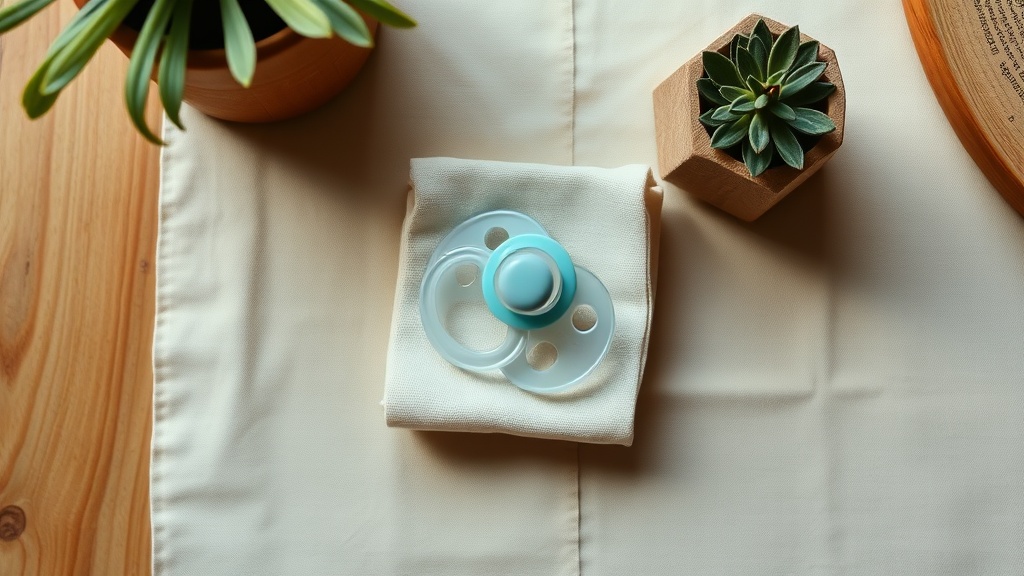
Are BPA-free claims on pacifiers enough?
No. A BPA-free label is not enough by itself. Buy pacifiers from traceable brands with clear material and safety information.
What's actually in it
Pacifiers often use silicone or latex for the nipple and plastic for the shield or handle. A label can say BPA-free, but the full product still needs clear material details, a known maker, and a retailer that can handle recalls.
For babies, do not gamble on mystery products. Choose a pacifier with a real brand name, age rating, batch or lot details, and clear safety information. Replace it when it gets sticky, cracked, cloudy, or torn.
What the research says
A 2026 study in Environmental Science and Pollution Research tested 7 commercially available pacifiers with HPLC-FLD. BPA migration ranged from below the limit of quantification up to 288 micrograms per liter. The highest total BPA release came from a product labeled BPA-free.
The clean takeaway is not that every pacifier is unsafe. It is that a front-label claim is not proof. Buy from traceable sellers, avoid unknown imported listings with thin safety details, and keep pacifiers out of high heat. For other baby swaps, choose products with named materials and simple construction.
The research at a glance
| Study | Journal | Year |
|---|---|---|
| Migration of bisphenol A from commercially available pacifiers: HPLC-FLD analysis and exposure assessment in infants and toddlers. | Environ Sci Pollut Res Int | 2026 |