Do plastic food trays for meat release chemicals?
Use caution. Plastic food packaging can transfer additives and non-intentionally added substances into food, especially with heat or longer contact.
What's actually in it
Plastic meat trays and food trays are food-contact materials. They can be made from polyethylene, polypropylene, polystyrene, PET, or multilayer plastics. These materials can include plasticizers, stabilizers, and other added or leftover substances.
Cold storage is not the same as heating. The clearest concern is cooking, microwaving, or reheating food in plastic packaging. Heat can increase chemical transfer.
What the research says
A 2026 Food Chemistry study tested 6 foods before and after cooking in plastic packaging. Researchers tentatively identified 35 intentionally added substances and 3 non-intentionally added substances. Several compounds transferred on contact, and some transferred only during cooking.
The same study reported that low-density polyethylene packaging transferred more plasticizers, while high-density polyethylene trays showed prominent transferable linear hydrocarbons. The authors flagged 15 compounds for greatest safety concern, including benzylbutyl phthalate and butylated hydroxytoluene.
A 2026 Journal of Hazardous Materials study identified 114 compounds migrating from paper, plastic, and multilayer food-contact materials under standardized test conditions.
What to do at home
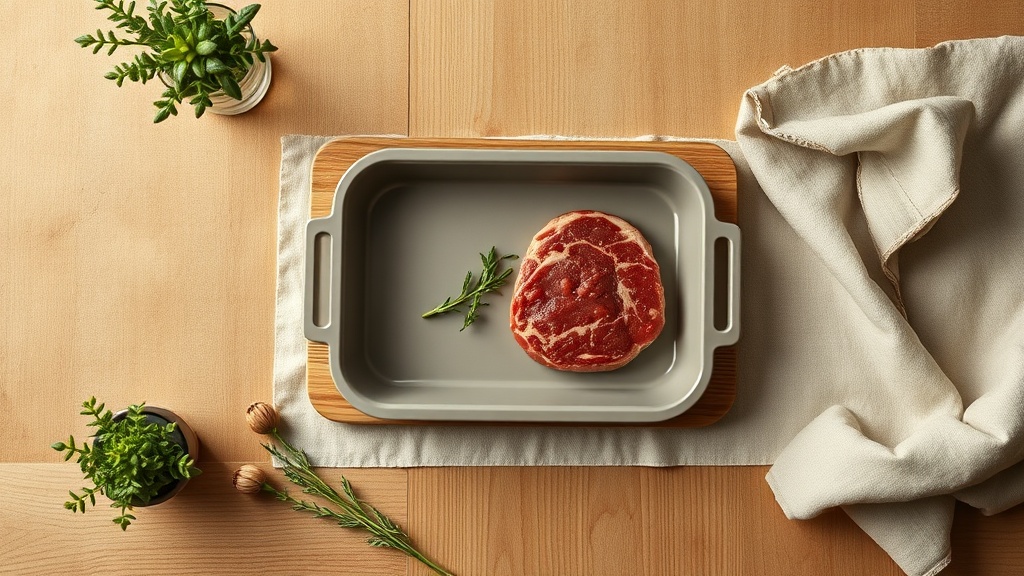
Do not cook or microwave meat in the store tray. Move food to glass, stainless steel, ceramic, or porcelain before heating. If you are storing food after opening the package, use glass storage instead of keeping it pressed against plastic wrap and foam trays.
The research at a glance
What to use instead
For opened packages and leftovers, glass storage helps limit extra contact with plastic trays and wrap.
Shop Non-Toxic Kitchen