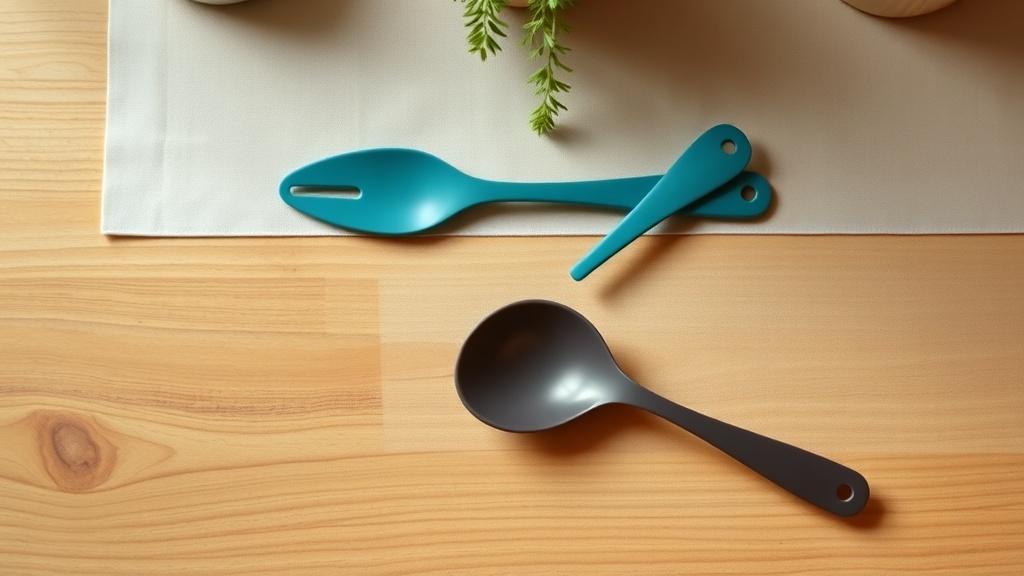
Do plastic serving spoons leach chemicals into hot food?
Use caution with plastic utensils in hot food. A 2026 study found primary aromatic amine migration from commonly used kitchen utensils, including a serving spoon sample.
What's actually in it
Plastic serving spoons and spatulas can be made from polyamide, polypropylene, polystyrene, PTFE, or other plastics. Heat, fat, acid, and wear can change how these materials behave in food contact.
The concern is highest when a plastic spoon sits in hot soup, sauce, curry, or stew. Scratched, softened, or heat-damaged utensils deserve even less trust.
What the research says
A 2026 study in International Journal of Environmental Health Research tested 55 kitchen utensil samples sold in Turkey. The researchers measured migration of 20 primary aromatic amines, some of which are classified as carcinogenic by official organizations.
Six primary aromatic amines were detected in at least 1 sample. Aniline was the most common. The highest aniline concentration was found in a serving spoon sample at 0.057 mg/kg. The authors found low concentrations overall, but said the results support continued monitoring.
This does not mean every plastic spoon is high risk. It does mean hot-food contact is a good place to use sturdier materials.
What to do at home
Use wood or stainless steel spoons for hot soup, tomato sauce, chili, and curry. Do not leave plastic utensils resting in hot pans. Retire any plastic utensil that melts, flakes, bends, smells strongly after heating, or has rough edges.
The research at a glance
| Study | Journal | Year |
|---|---|---|
| Aromatic amine migration from commonly used kitchen utensils marketed inTurkey: detection and quantification using LC-MS/MS. | Int J Environ Health Res | 2026 |