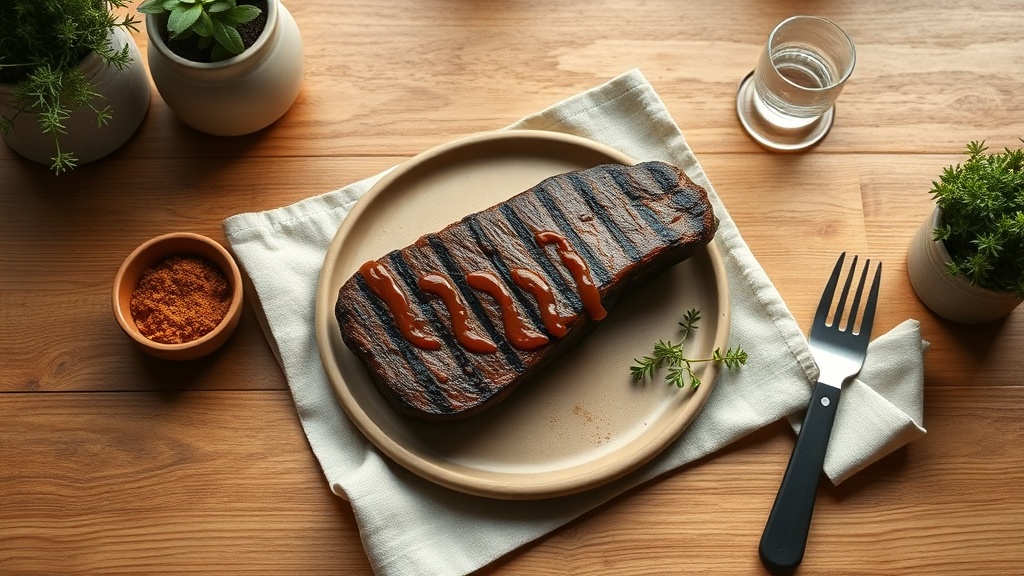
Is it safe to eat charred grilled meat if you have colon cancer risk?
Use caution. High-heat, charred meat can form HCAs and PAHs, and a 2026 review names both as food genotoxins.
What is actually in it
Grilling meat at high heat can form heterocyclic aromatic amines, often called HCAs. Smoke from fat dripping onto flames can add polycyclic aromatic hydrocarbons, often called PAHs.
The biggest concern is charred or very browned meat. A once-a-week serving is not the same as daily charred meat, but higher-risk households have good reason to lower the load.
What the research says
A 2026 International Journal of Molecular Sciences review names HCAs, PAHs, N-nitroso compounds, acrylamide, heavy metals, and mycotoxins as food or environmental genotoxins linked with cellular senescence pathways.
The same review explains that heme in red meat can help form genotoxic species in the colon. That does not give a precise weekly serving limit. It does support a practical rule: avoid char and use lower-heat cooking more often.
What to do instead
Cook meat lower and slower when you can. Cut away blackened parts, reduce flare-ups, trim extra fat before grilling, and rotate in braising, boiling, steaming, or oven cooking. Stainless steel tools and simple cookware are better defaults than coated or disposable cooking surfaces.
The research at a glance
| Study | Journal | Year |
|---|---|---|
| Cellular Senescence Triggered by Food and Environmental Genotoxins. | Int J Mol Sci | 2026 |