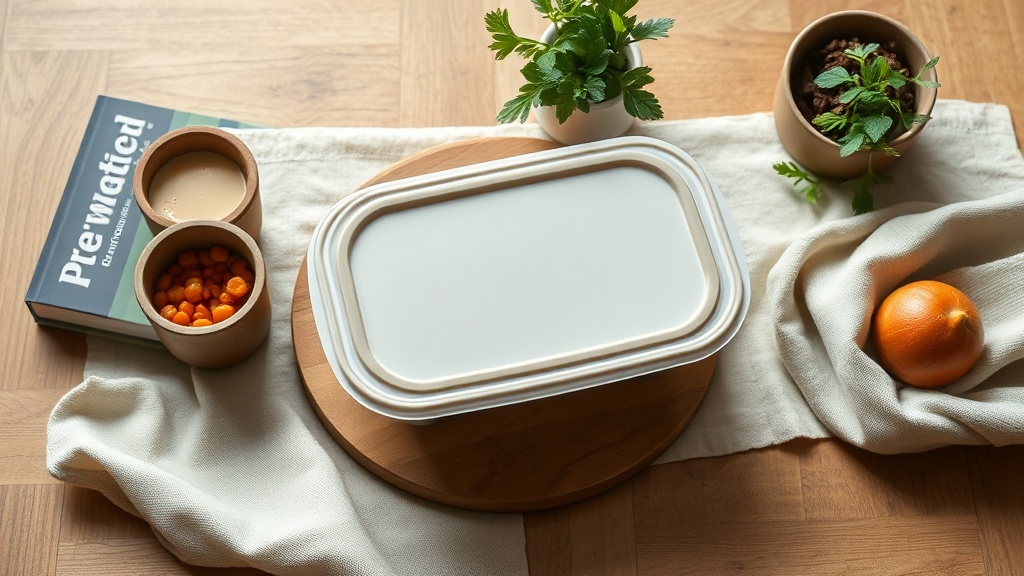
Is it safe to use plastic storage containers for reheating fatty leftovers in the microwave?
Avoid microwaving fatty leftovers in plastic. Heat, oil, scratches, and repeated washing make glass or ceramic the better reheating default.
Short answer
Avoid microwaving fatty leftovers in plastic containers.
Microwave-safe usually means the container should not melt or deform under stated use. It does not mean nothing can move from plastic into food.
What the concern is
Oil, heat, steam, scratches, and repeated washing all stress plastic. Chili, curry, pasta sauce, and greasy leftovers are tougher on containers than dry snacks.
What the research says
A 2026 Food Chemistry study tested foods cooked in plastic packaging by microwave and conventional oven. Several compounds transferred from packaging to food, and some transfers increased after cooking.
A 2025 Journal of Agricultural and Food Chemistry study found polypropylene nanoplastic and microplastic release from food storage containers into water, with higher levels after 90 C rinsing.
A 2023 Toxics study simulated food-use scenarios and found nanoplastic release from plastic packaging under hot-water and high-temperature conditions.
What to do instead
Move leftovers to glass, porcelain, or ceramic before reheating. Cover with a non-plastic lid or plate. Replace plastic containers that are scratched, warped, cloudy, or stained.
The research at a glance
What to use instead
For reheating leftovers, use microwave-ready porcelain, glass, or ceramic dishes instead of plastic containers.
Shop Non-Toxic Kitchen