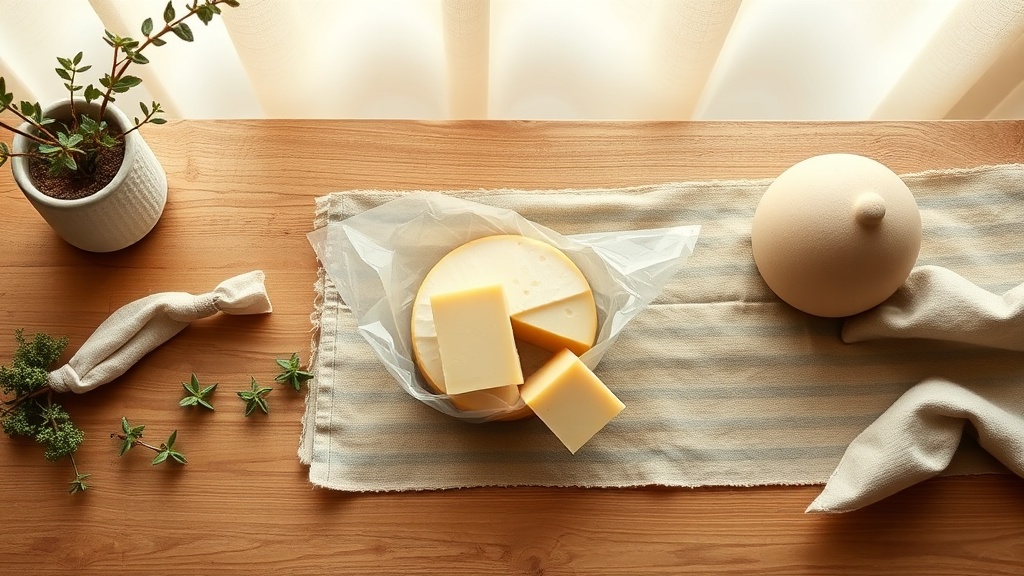
Is it safe for plastic wrap to touch fatty cheese during storage?
Avoid direct plastic wrap contact with fatty cheese. Food-contact studies show plasticizers and other compounds can migrate from plastic materials, and glass storage is an easy swap.
Short answer
Avoid pressing plastic wrap directly onto fatty cheese for hours or days.
Cheese has long contact time with the wrap. It is also easy to store another way.
What the concern is
Plastic wrap is a food-contact material. Depending on the film, it can contain plasticizers, cling agents, and other additives. Long contact with food gives those materials more time to transfer.
What the research says
A 2019 EFSA Journal review evaluated a plasticizer used in soft PVC wrap films and reported measurable migration up to 165 micrograms per kg food under tested conditions, within reviewed use limits.
A 2026 Food Chemistry study found chemical transfer from plastic food-contact materials after cooking, with low-density polyethylene packaging showing more transferred plasticizers.
A 2026 Journal of Hazardous Materials study found 114 migrating compounds from paper, plastic, and multilayer food-contact materials. Plasticizers and non-intentionally added substances were frequent findings.
What to do instead
Use glass containers or parchment as a barrier. If you use wrap, keep it from touching the cheese directly. Do not microwave plastic wrap on food.
The research at a glance
What to use instead
Store cheese and leftovers in glass containers instead of pressing plastic wrap directly onto fatty foods.
Shop Non-Toxic Kitchen