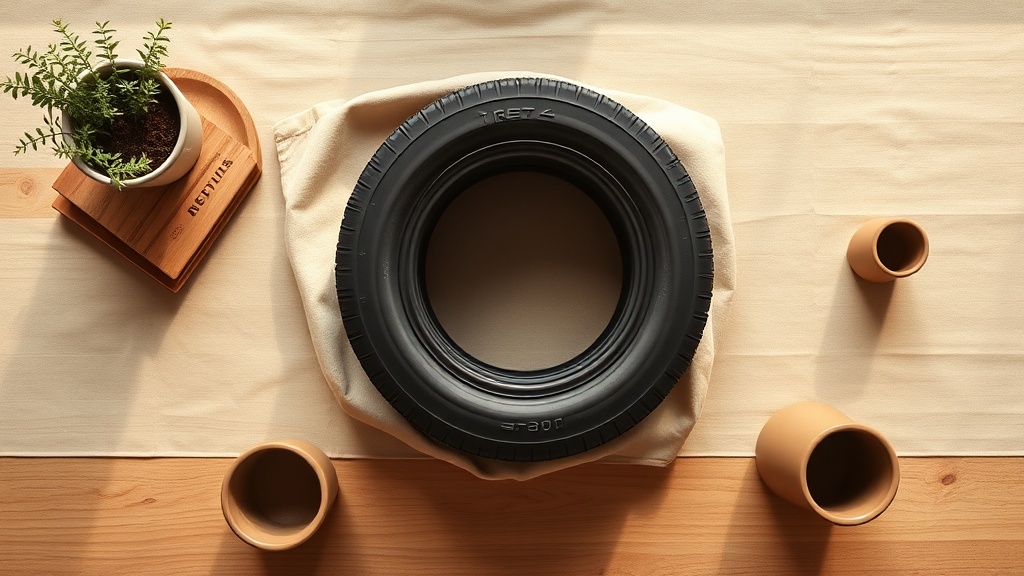
Is tire dust near kids play areas a 6-PPD-Q concern?
Yes. Tire wear is a major source of 6-PPD and 6-PPD-Q, and children should not play on recycled tire surfaces when better options exist.
What is actually in it
Modern tires use 6-PPD to slow cracking. In air and water, 6-PPD can change into 6-PPD-Q.
Tire wear particles show up in road dust, stormwater, soil, and air. Recycled tire crumb on some play surfaces adds another contact point for kids.
What the research says
A 2026 Comprehensive Physiology review identifies tire wear particles as a primary source of airborne and waterborne microplastics, 6-PPD, and 6-PPD-Q.
The review says people can be exposed by inhalation, ingestion, and skin contact. It also describes oxidative stress, inflammation, mitochondrial dysfunction, cell death, and blood-vessel damage in available mechanistic studies.
The human evidence is still developing. The practical answer for kids is simple: choose grass, sand, wood fiber, or other non-tire play surfaces when you can.
What to do instead
Skip recycled tire crumb when choosing play spaces. Take shoes off at the door, wet-mop road dust, and wash hands after playgrounds near busy roads. For toys and play items, choose wood and simple materials over soft plastic when possible.
The research at a glance
| Study | Journal | Year |
|---|---|---|
| Micro-Nano Plastics and 6-PPD-Q in Cardio-Pulmonary Health: Environmental Sources, Systemic Exposure, and Mechanistic Insights. | Compr Physiol | 2026 |